In April GAus held the first All Members Webinar for 2026 by GAus Department Heads. Following are the topics covered for Airworthiness, Operations and Soaring Development.
Airworthiness - David VilleRS (CAP)
Annual Inspection Periodicity
Annual inspections under the GS Form 2 are required every 12 months or 250 hours time in service, as specified in MOSP 3, section 9.3.4. The 250-hour limit was introduced when it became clear that some gliders were accumulating considerably more than 100 hours in a 12-month period. The default Form 2 maintenance program is designed around an aircraft flying up to 100 hours per year, and is not intended to assure the ongoing airworthiness of a high-utilisation aircraft.
A small number of gliders — around half a dozen in the past year — have exceeded 250 hours in a 12-month period. For these aircraft, alternative maintenance systems are available, including the manufacturer's maintenance scheme as documented in the aircraft's maintenance manual, or a variation of Form 2. Any change to the system of maintenance must be documented in advance in the log book and approved by the Engineering Maintenance Organisation (EMO). Approval is not automatic, and operators of high-utilisation gliders are encouraged to discuss their situation with the EMO directly.
Rigging and Control Connections
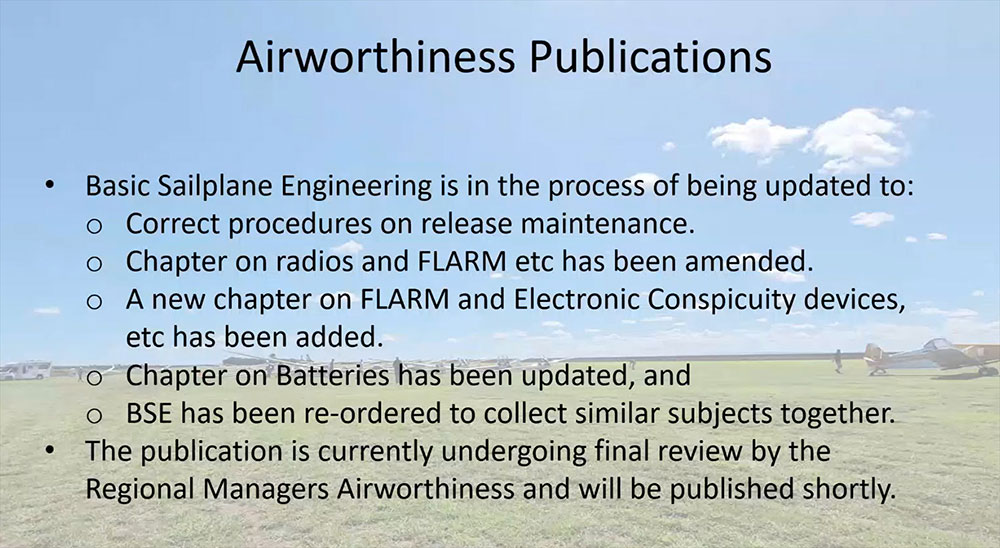
Mis-rigging of sailplanes and misconnection of controls remain serious concerns. EASA has reissued Safety Information Bulletin 2019-07, now at Revision 1, which has been republished in Australia as AN178 and is available on the Gliding Australia website. In Europe, three or four fatalities occur each year that can be attributed to a mis-rigged glider or incorrectly connected controls — a sobering figure given that many European clubs rig from the trailer each flying day. Australia has recorded a number of similar incidents, though fortunately without recent fatalities.
AN178 contains a substantial body of useful information and should be brought to the attention of all daily inspectors. Connections of particular concern include the horizontal tail and Pintle-type connections, both of which have featured in recent Australian incidents. Anyone who rigs, de-rigs or conducts daily inspections on gliders will benefit from reading this document carefully.
Tost E22 Release and Small Rings
The Tost E22 is a lightweight tow release fitted to the ASG29 and possibly other types. It is less rigid than some other releases and has a larger gap at the hook point, which means a small tow ring is retained by a relatively narrow margin. There have been at least one confirmed case of a ring falling free before load was applied, and at least one uncommanded release.
The issue appears to be sensitive to the diameter of the steel in the small Tost ring. The manufacturing specification calls for a diameter of 6.7 to 7 mm, but rings wear in service — particularly when used on macadam or concrete surfaces. A survey of clubs has so far covered 71 ring pairs. Of those, seven were found to be outside tolerance, with six measuring below 6.7 mm. While 90 percent of rings measured so far are within specification, clubs are strongly encouraged to measure their rings and report results. Guidance on a formal minimum acceptable diameter will be issued once sufficient data has been collected.
Canopy Latches
A review of uncommanded canopy opening events since 2011 identified 59 separate incidents. While 25 of these appear to result from interrupted pre-takeoff checks, 18 of the 59 — approximately 30 percent — involved Astir types, both single and two-seat variants. This is a higher proportion than might be expected from a latch system that appears straightforward and is generally regarded as reliable.
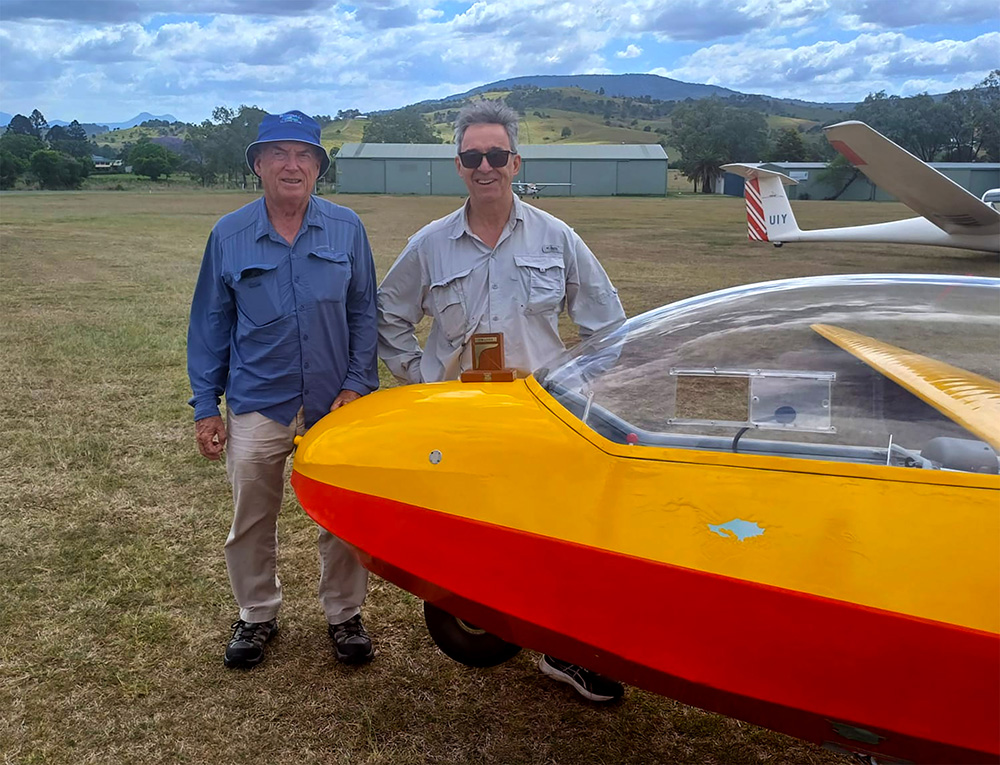
The Astir canopy latch uses a sliding bar with a red knob that pushes retaining pins through three cylinders — two attached to the canopy frame and one to the fuselage. When functioning correctly it is simple and positive, but a number of defects can prevent the latch from seating properly. These include spring failure, poor lubrication causing the bar to bind, misalignment of the cylinders, a bent bar, corrosion on the pins or bar, contamination from dirt or paint, and thermal effects. A canopy latch that operates correctly in a cool hangar may perform very differently after sitting closed in direct sun on a hot day.
From an airworthiness perspective, the appropriate response is thorough maintenance and functional checking at both Form 2 annual inspection and daily inspection. Any defects found should be rectified and recorded in the maintenance release. An Operational Service Bulletin covering Astir canopy latches across both airworthiness and operations is currently being prepared. It is noted that the Standard Cirrus uses the same canopy opening system, and this is being incorporated into the OSB as well. Contact has been made with the type certificate holder, and an illustrated parts list has been obtained, which may assist clubs in sourcing replacement components by part number.
Regardless of any maintenance action, canopy security is ultimately the pilot's responsibility. Multiple people checking a canopy does not improve safety and may reduce it, because when responsibility is shared it can effectively belong to no one. The pilot must confirm the canopy is closed and locked before flight — every flight.
Publications Update
The Basic Sailplane Engineering manual is in the final stages of revision. The update corrects inconsistencies between BSE chapter 16 and MOSP 3 chapter 13 on release maintenance, amends the chapter on radios and FLARM, adds a new chapter on FLARM and electronic conspicuity, updates the battery chapter, and reorganises the manual so that related subjects are grouped together rather than scattered throughout. The revised edition includes a chapter on safety flashes, which is relevant to pilots considering fitting a strobe to their glider. Publication is expected within a couple of months.
The daily inspection syllabus in GPC Unit 42 has also been revised and has received formal approval from both operations and airworthiness. The new syllabus will be incorporated when the GPC is next updated. Work is also underway on syllabuses for the pilot maintenance modules, several of which are close to completion.
Operations - AARON STROOP (COP)
Incident Review
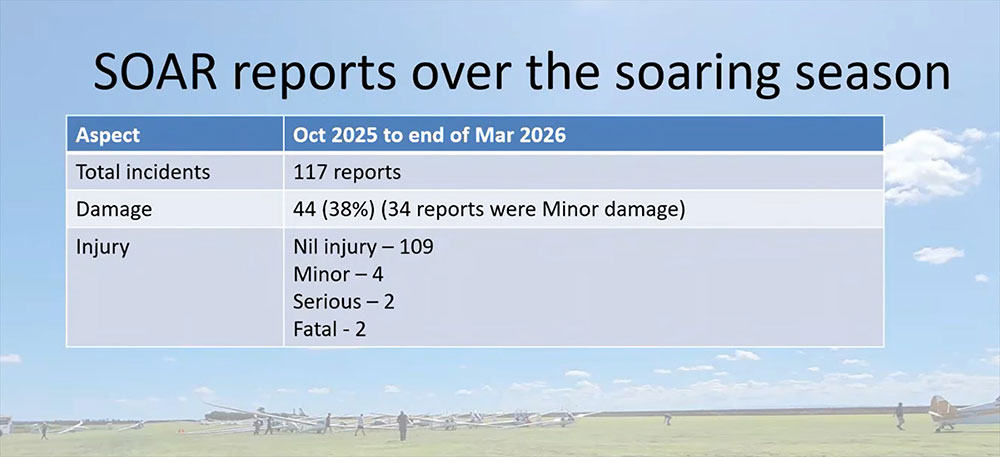
The past season produced 117 safety reports. Of these, 109 involved no injuries, four resulted in minor injuries, two caused serious injuries, and two were fatal. The season opened with four major accidents, including two fatalities occurring two days apart — a deeply sobering start that affected the entire community.
In terms of damage, 44 reports involved some level of aircraft damage, with 34 of those classified as minor and 10 as major.
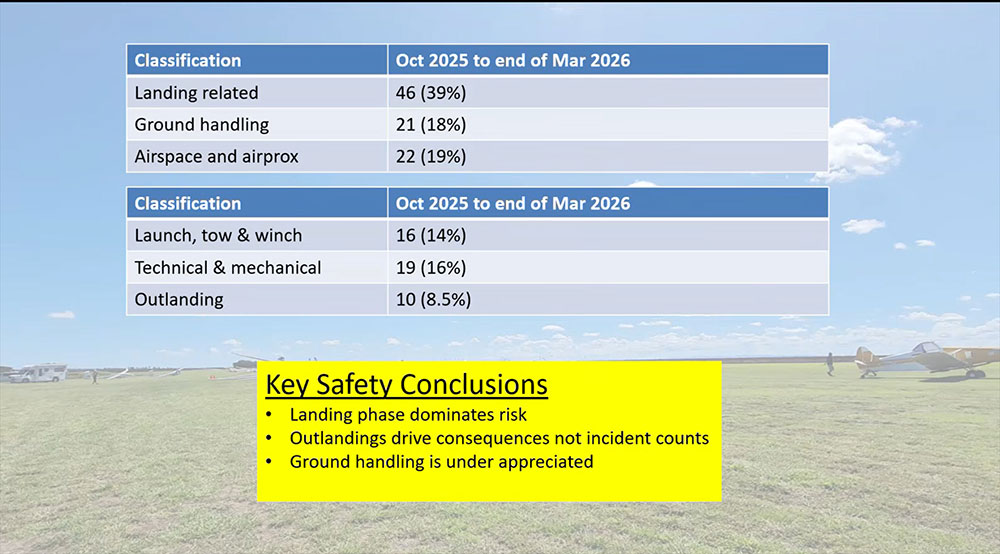
Landing-related incidents dominated the statistics, accounting for 39 percent of all reports. Ground handling incidents made up 18 percent — a category that is frequently underestimated in terms of the care it demands. Damage sustained in outlandings was low in frequency but high in consequence, with repair costs directly affecting insurance premiums for all pilots and clubs. Airspace infringements and air proximity events accounted for 22 reports, and there was at least one mid-air collision during a competition, though both gliders landed safely. Technical and mechanical issues represented 16 percent of reports.
The key takeaways are that landing safety deserves the most consistent attention, that outlandings carry disproportionate consequences even when they occur infrequently, and that ground handling discipline around the airfield deserves greater awareness than it typically receives.
Instructor Training Forms
A complete set of new instructor training application and assessment forms has been introduced, covering Level 1, Level 2 and Level 3 instructor training. The forms are aligned with the training manual and incorporate a club preparation checklist to ensure candidates arrive at training with all prerequisites in place — including an appropriate medical, a current GPC and any other relevant documentation. It is wasteful for a candidate to complete training only to then spend weeks organising paperwork that could have been sorted beforehand.
Administrative and Compliance Matters
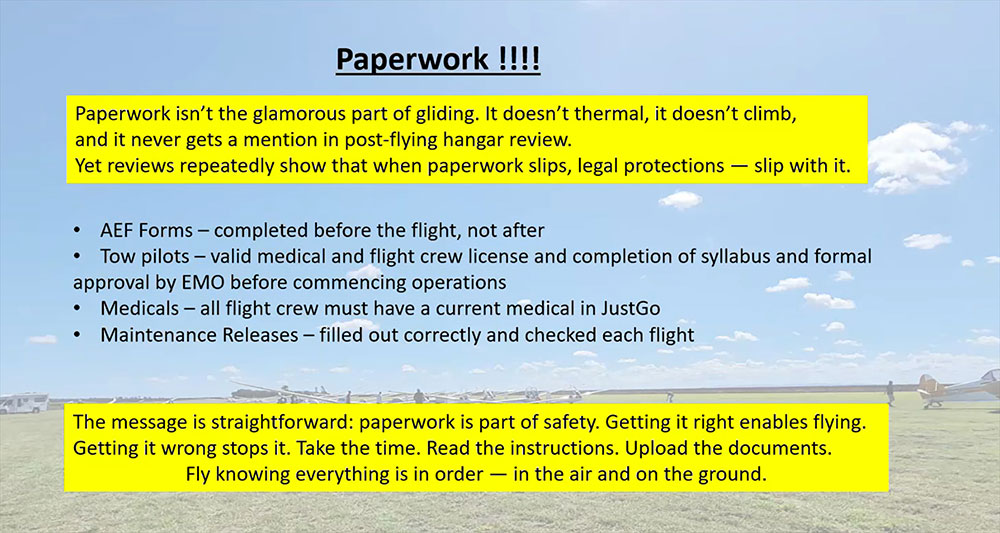
Air Experience Flight forms must be completed before the flight takes place, not after. This applies to every passenger, regardless of how many are flying on a given day. The instructor conducting the flight bears personal responsibility for confirming the form has been completed. This is a growing compliance issue that needs to be addressed firmly.
Tow pilot appointments require valid medicals, a current flight crew licence, completion of the full tow pilot training syllabus, and formal approval from the EMO before any towing commences. Cases have occurred where pilots began towing without the required medical or without EMO approval. Medicals and endorsements must be current and recorded in the JustGo system — this is now the primary means by which Gliding Australia verifies qualifications.
Maintenance releases must be current and checked before every flight. Gliders are being flown with expired Form 2 inspections by people who should know better.
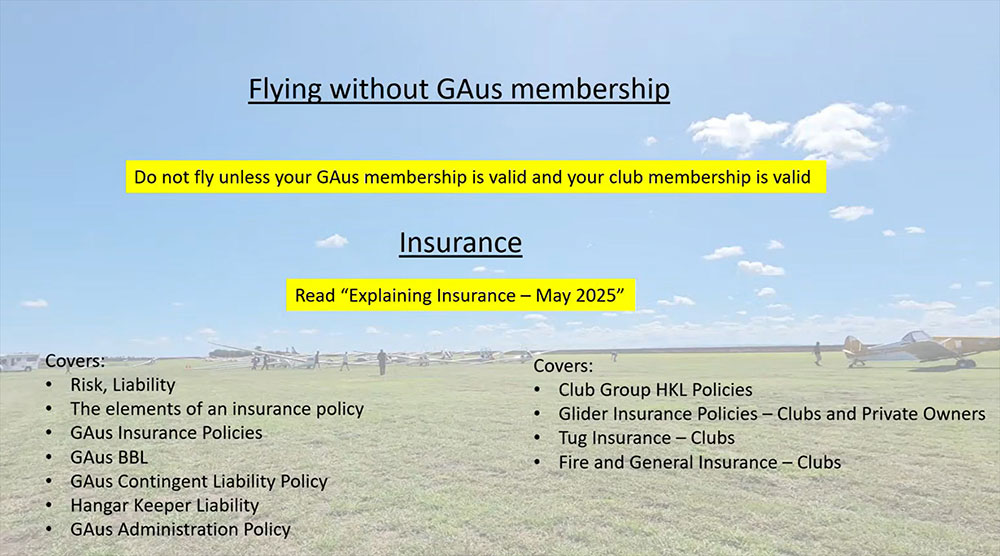
Membership of both the local gliding club and Gliding Australia is a legal requirement to fly gliders in Australia. Pilots who are uncertain about their membership status should contact the Gliding Australia office directly at
A comprehensive insurance guidance document, updated and available in the documents section of the Gliding Australia website under Administration, explains the policies held by Gliding Australia, what they cover, what they do not cover, and how clubs and private owners can arrange appropriate coverage. In particular, tow tugs are not covered under the Blanket Liability policy — operators should read the document carefully to understand their position.
Training and Standardisation
A panel meeting is coming up to address a range of training and standardisation issues. Topics include solo student supervision, type conversion procedures, and the need to standardise pre-flight checks and flows across clubs. Presently, practices vary considerably between club. Some use card checks, some do not and some use hybrid approaches, and and this inconsistency needs to be resolved.
Rope break training methodology is also under review. When training ropes break consistently at low altitude, unhelpful muscle memory may develop, leading students to turn back instinctively even from heights where a straight-ahead landing is the correct response. The intention is to conduct more of this training at altitude, where the consequences are manageable and the learning environment is safer.
Ground roles for experienced but aging instructors are also on the agenda, including the possibility of a ground CFI designation to support small clubs that do not have the depth to field a flying CFI but should not be allowed to simply disappear from the movement.
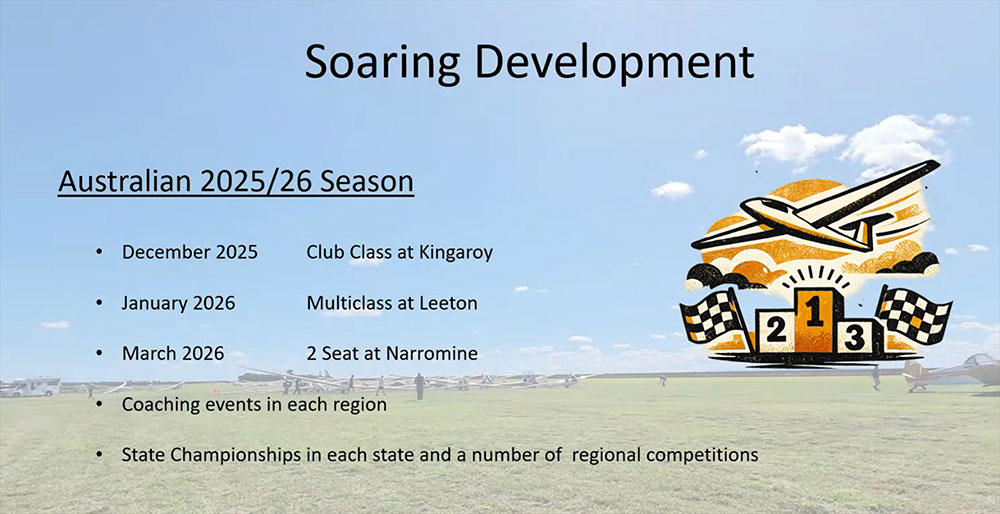
Soaring Development - Craig Vinall (CSDP)
National Competition Attendance
Attendance at national competitions has been declining and remains a concern. Entries at some events were insufficient to justify running separate classes, leading to the combination of club class with two-seat nationals, and the merging of 15-metre and standard class. The multiclass event at Leeton was better attended, and the experience there suggests that a combination of strong promotion, a reliable annual date, and an accessible location are the factors most likely to produce a healthy field. Clubs willing to host national competitions are encouraged to come forward.
World Championships
Australia will be represented at the senior world championships in Poland and the junior worlds in Germany. A Squad Week — the first of its kind in several years — was held at Tocumwal and was well attended by selected pilots, team captains and a number of junior pilots identified as likely future representatives. Financial support through the soaring development levy provides approximately $5,000 per pilot toward the cost of attending world championships, against an estimated total cost of $30,000 to $40,000 per pilot.
Distance Handicap Tasking
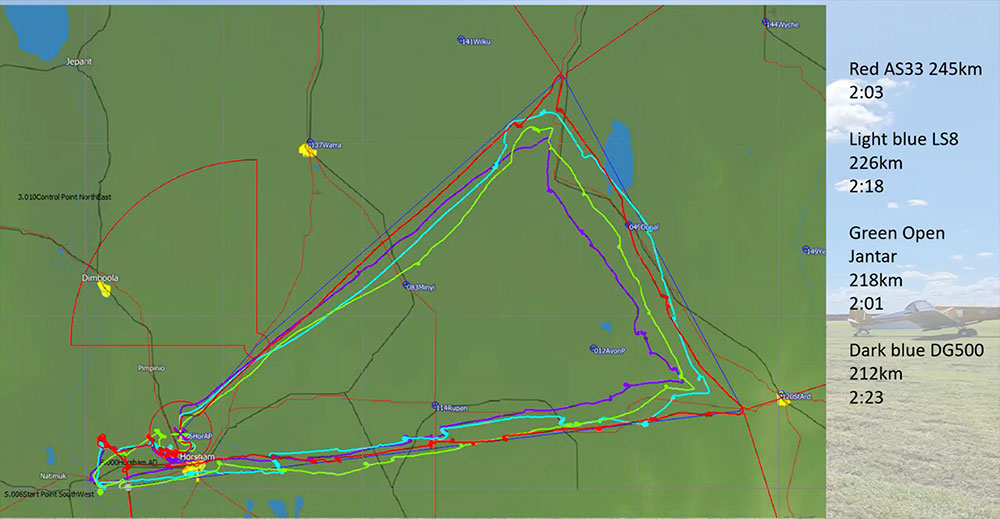
A distance handicap tasking format has been introduced at national level. Rather than setting a fixed course distance, this system assigns each glider a task distance proportional to its handicap, with the intent that all gliders complete their respective tasks in approximately the same elapsed time. This addresses the disadvantage faced by lower-performance gliders on fixed racing tasks, where they may be flying in deteriorating conditions long after the higher-performance ships have finished.
The system requires pilots to load a task file onto their device, either via Wi-Fi or SD card. Assistance is available from the system's developers, and a dedicated website explains the format for both competitors and competition organisers. Pilots with older instrumentation are encouraged to explore the documentation, as the initial learning curve appears to be the main source of resistance to adoption.
Suggestions for changes to national competition rules should be directed to the National Competition Committee, and in particular to NCC Chair Lumpy Paterson.
Canopy Strobes
The IGC has mandated canopy strobes — or more precisely, conspicuity flashes, which may be located in the fin, near the wheel well, or in the canopy — for international competition. Pilots intending to fly in world competitions or loaning their gliders for that purpose will need a strobe fitted.
In Australia, strobes are encouraged but not mandated for domestic competitions, and there is currently no intention to introduce a mandate. The view is that it is worth observing how strobes perform at international level before imposing a further equipment requirement on domestic competitors. Pilots wishing to fit a strobe should consult the forthcoming revised edition of Basic Sailplane Engineering, which contains a relevant chapter on the subject.
View the full webinar at tinyurl.com/Gaus-web