True Champions
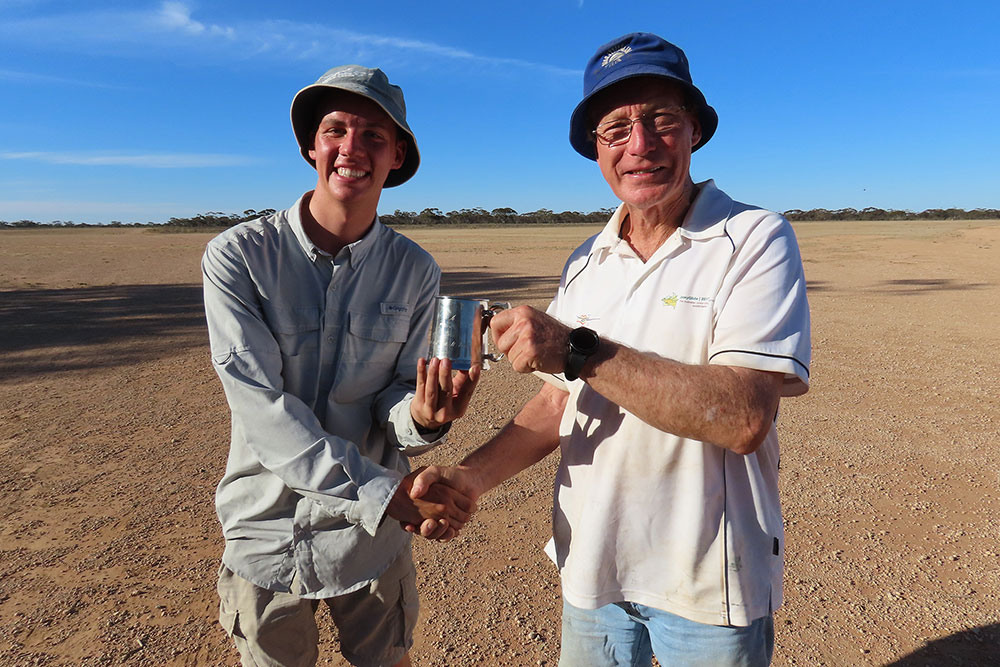
Max Scutchings from Adelaide Soaring Club is the new Club Class Junior World Gliding Champion after his outstanding performance at the Junior World Gliding Championships in Aalen-Elchingen, Germany.
The championships were held from 1 to 14 August 2026 in Club and Standard classes. Alongside 47 pilots from around the world competing in Club Class, Max beat them all. The international field included many more experienced pilots with much more competition experience, including the current European Junior Champion.
His admirable achievement is made more remarkable by the fact that Max took his first solo flight in a glider just two years ago, and celebrated his 18th birthday during the contest.
He flew his first gliding competition at the end of 2025, flying in the Victorian and South Australian State Championships followed by the Multiclass Nationals in Leeton. He went on to win JoeyGlide, the Junior Nationals, earning his place on the Australian team with Amber Davison who took 2nd place at JoeyGlide.
Amber, from Gliding Club of Victoria, is also relatively new to the gliding scene – like Max, flying her first solo flight just two years ago. She also had an outstanding result in Germany, taking 13th place overall ahead of pilots from all the major gliding countries in Europe, the USA and South Africa.
Max’s and Amber’s performances are a tremendous achievement and an outstanding result for Australia. Congratulations are also due to their Team Captain Mandy Temple. Mandy has served as contest director for numerous gliding competitions including WGC Keepit. She is a past President of the GFA and has served the Australian gliding community devotedly for many years.
Sean Young
Following are contributions from Max and Amber and a running commentary made during the contest by Max.
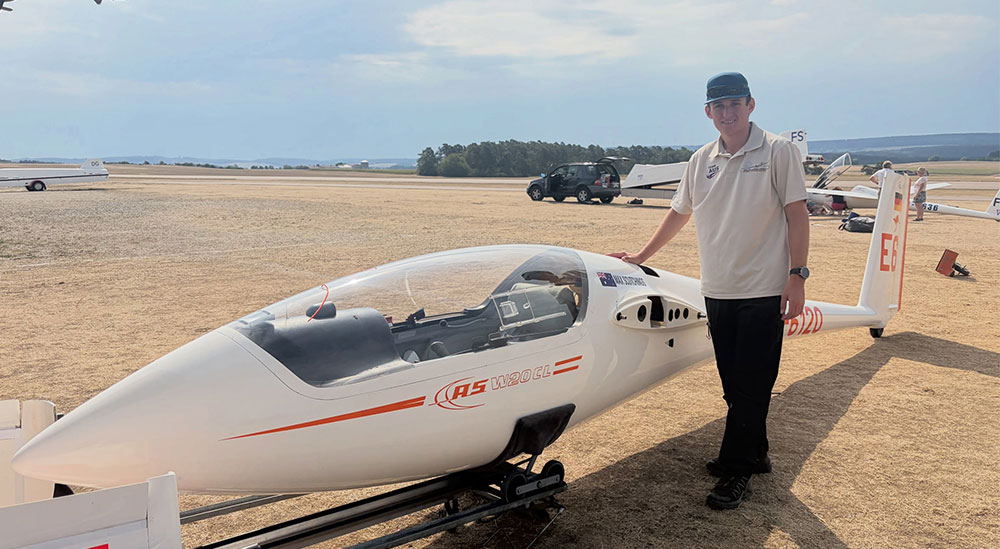
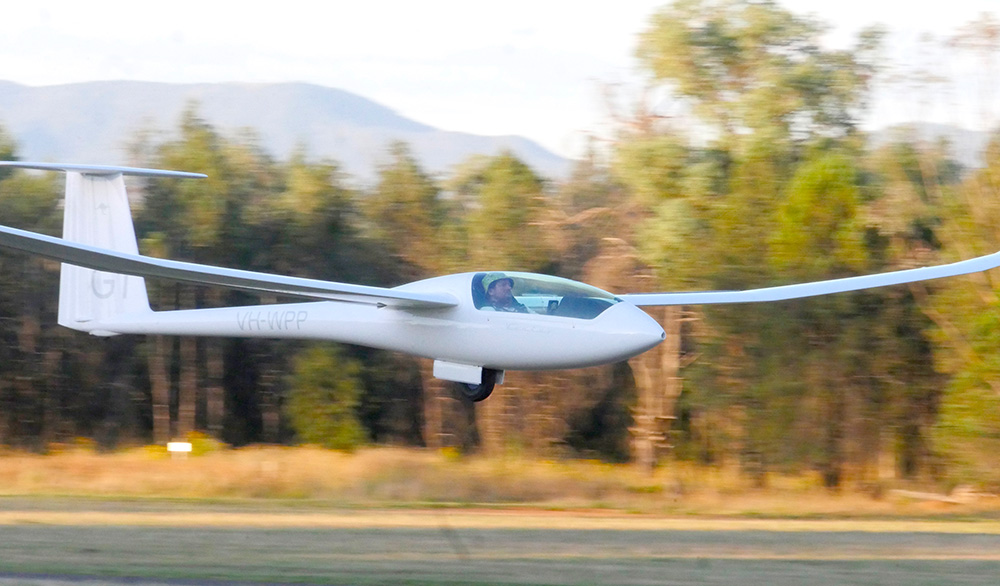
ABOVE: Max Scutchings with the ASW20 he flew to victory at JWGC.
Photos by Max Scutchings, Amber Davison and various
MAX SCUTCHINGS
My plan for this year’s JWGC was to learn as much as I could about the World Championships scene to get a head start for the 2029 Worlds in Lake Keepit. In the lead up to the competition, I never really thought about the scores or my result, as that wasn't my main focus.
Instead, I would say that mindset was the deciding factor in my result. The hardest part of the competition was waking up everyday and resetting to treat the day as a new one, regardless of whether the previous day was good - or not so good.
I think it also helped that, because I didn't have any specific expectations for the competition, I knew I'd be happy with the result no matter what. Outside of those personal factors, a very large group of people have contributed to my result – it would not have been possible without them.
Staying the distance
Among the general skills I brought with me, resilience was probably the most important, and I relied on it throughout the competition. If you get low or have a slow spot during a competition flight, it is important that from that point, you reset and fly the best flight you can from then on, Doing that well takes quite a lot of resilience. I learned how to achieve that throughout the competition, which helped on more than a couple of days.
In particular, the routine of the competition became one of its biggest challenges. It was 12 days of intense focus, from 7am to 10pm, with only time to relax for an hour after briefing. By the end I was completely out of energy.
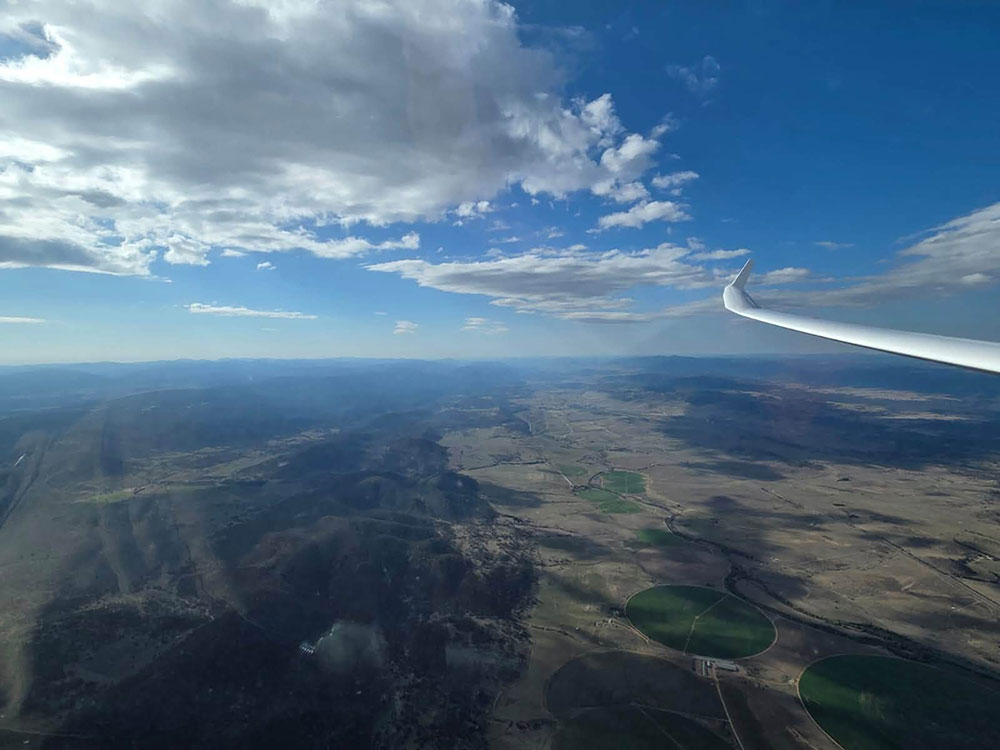
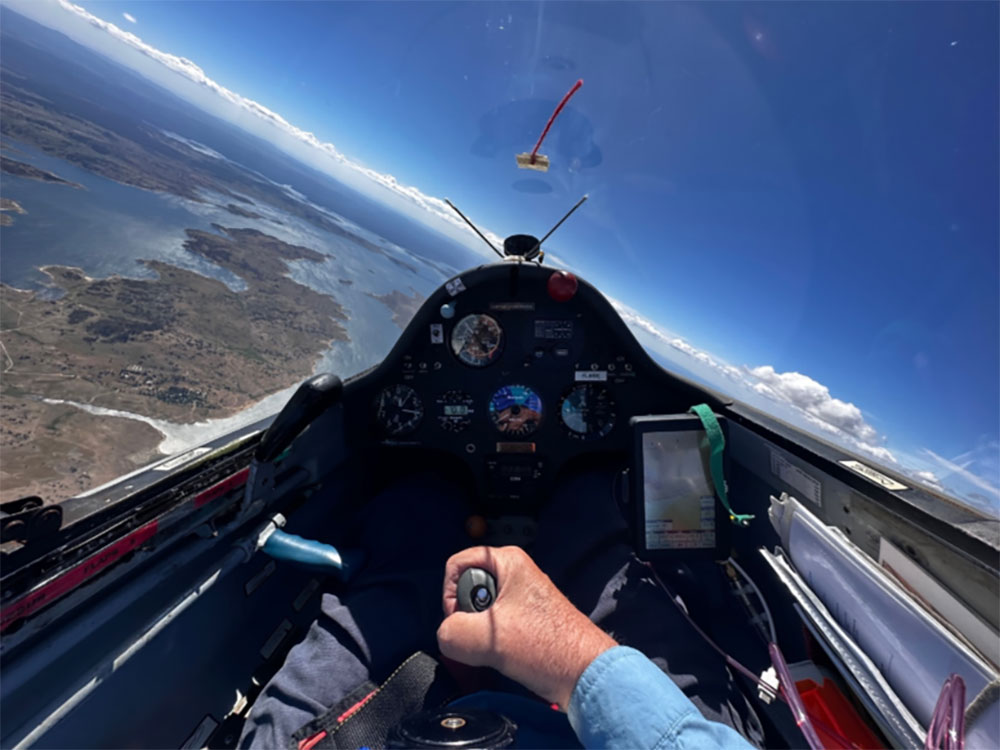
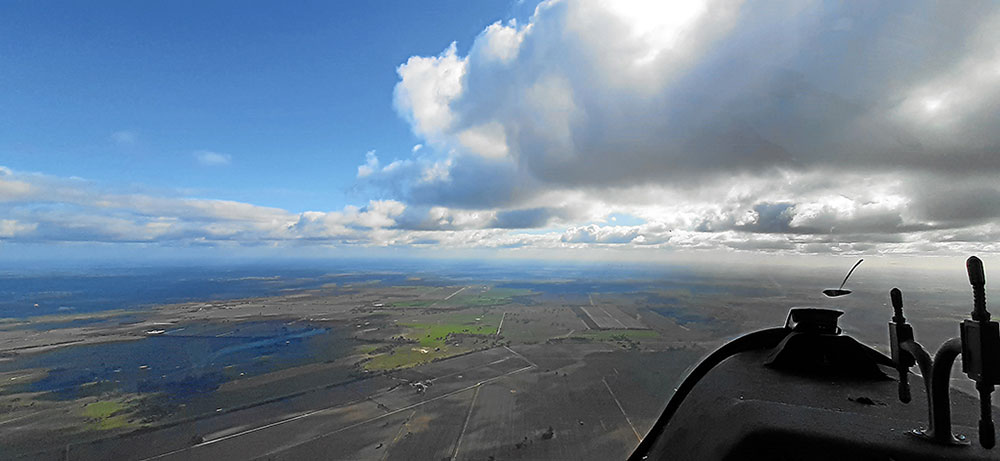
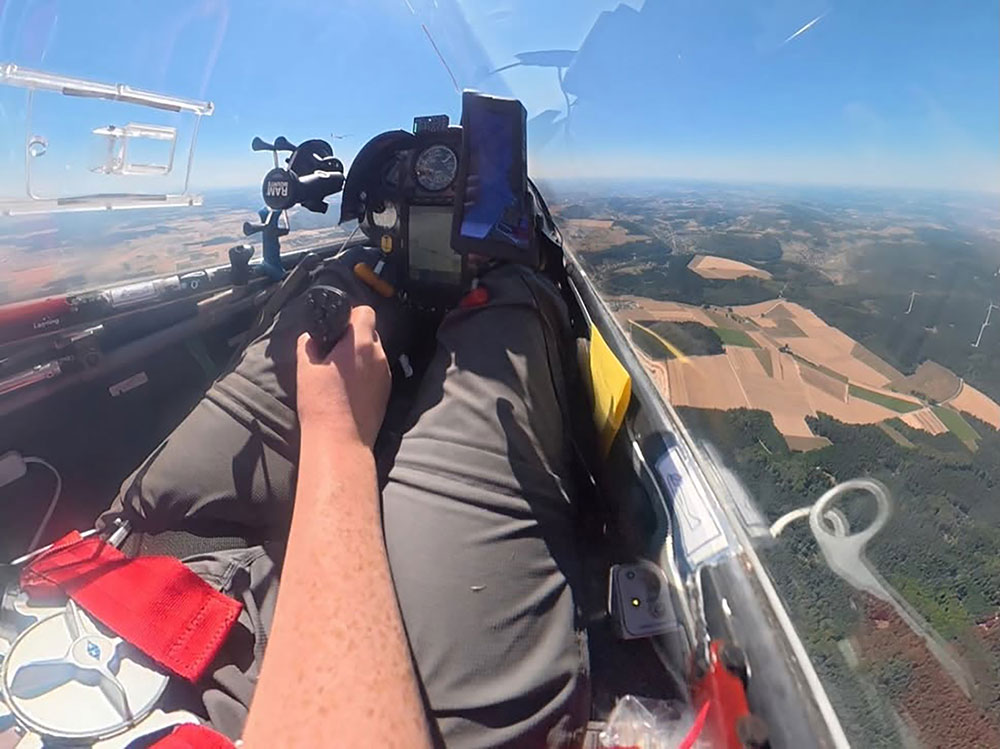
But in contrast, the scenery surrounding us soon became the most enjoyable part of the competition for me. Germany is full of many different colours especially at this time of year, and the terrain is quite technical in parts with hills and ridges above 1,000m MSL.
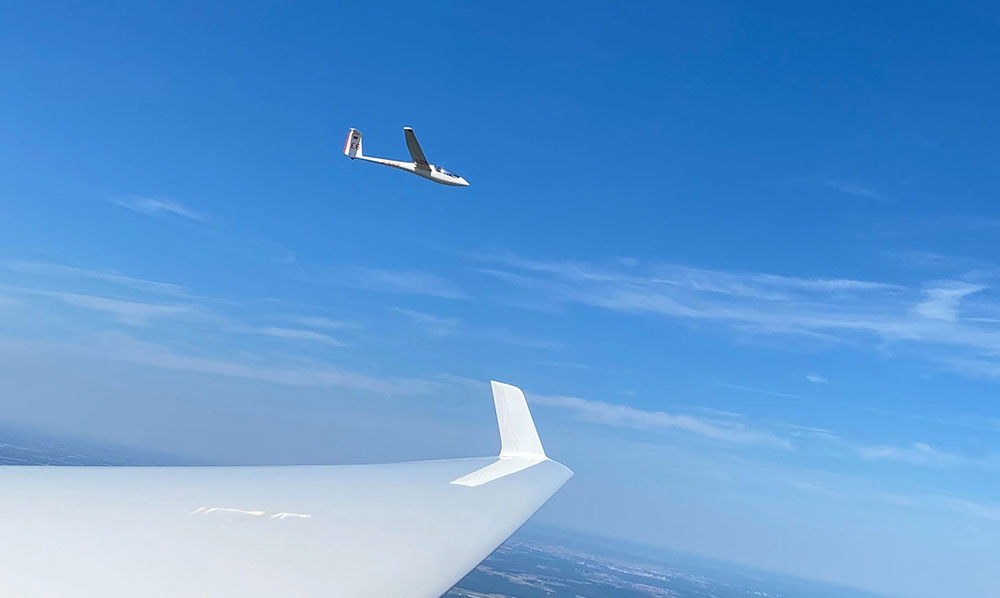
ABOVE: Max flying with Amber, in a photo taken from her cockpit.
Room for Improvement
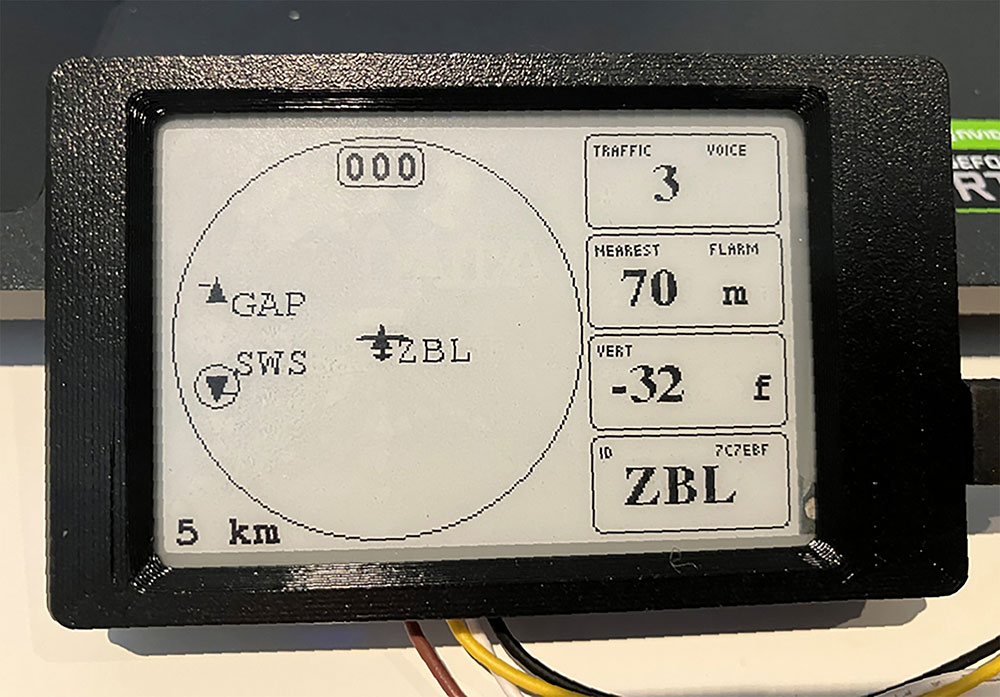
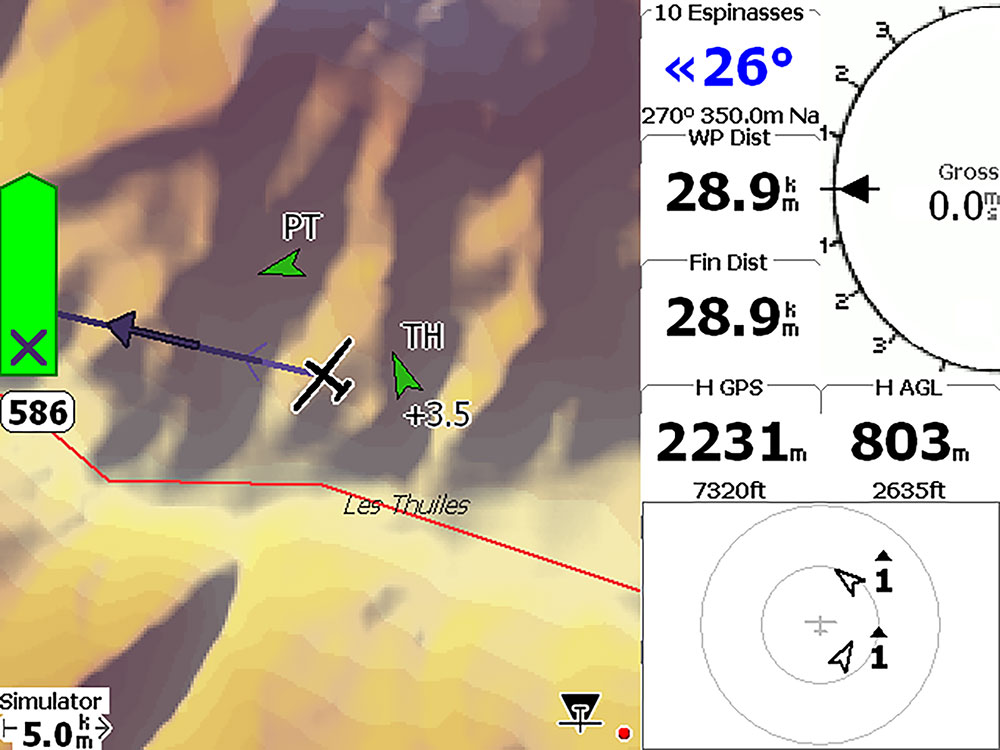
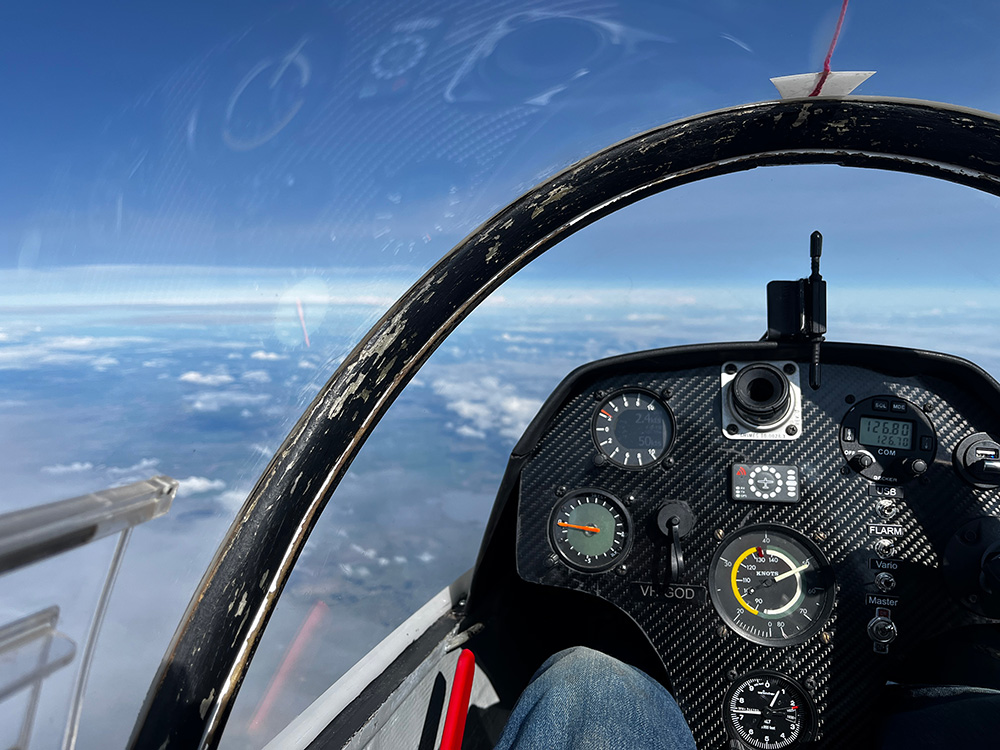
At my next competition, I would take a lot more time to select a glider with modern technology. The glider I flew was immaculate on the outside, but was unfortunately lacking an LX90xx flight computer, which limited my ability to track people via FLARM. A good FLARM and FLARM display are the most important pieces of technology for competition flying.
The entire competition was an amazing experience, and I learned a lot by watching the experienced teams fly together to get the best out of the air and their gliders. I would highly recommend competing in or even being at a Junior World Gliding championships, as the atmosphere is like nothing else.
The Sky is the Limit
I would encourage you to push your own limits in Australia, even just at your home club. A familiar area is a good place to learn what you are capable of. I would also recommend flying on days that you wouldn't usually consider flying on, as they teach you a lot about the weather and what is actually possible in a glider. Gliding is at least 20% mental, if not more, so how you fly on a certain day largely depends on the attitude you approach that day with.
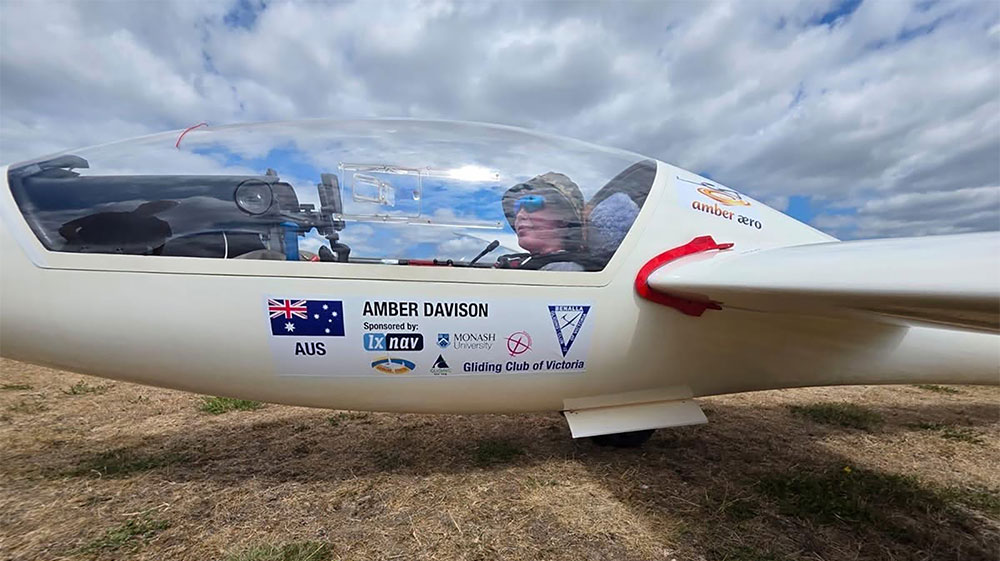
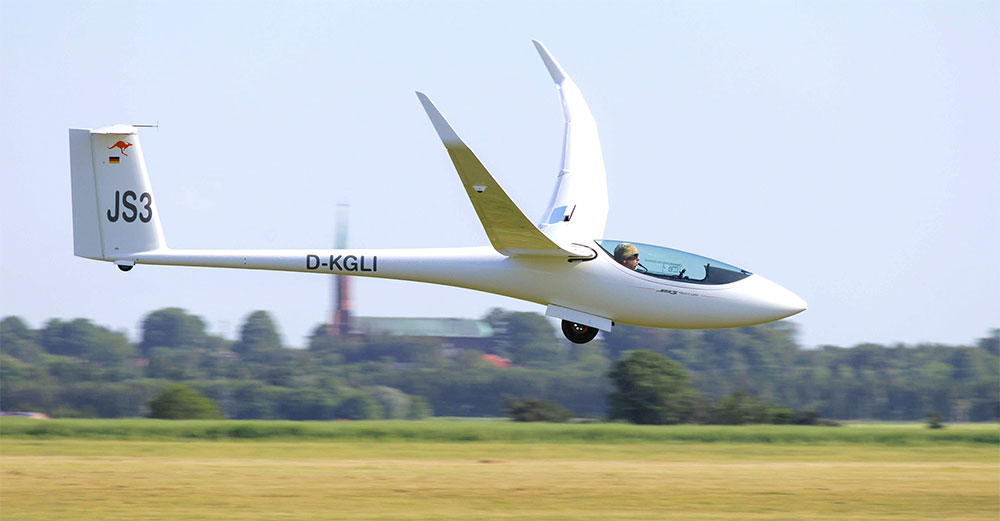
ABOVE: Amber Davison flew an LS3 and finished in 13th place out of 45 contestants.
AMBER DAVISON
As I went into this competition, I wasn't really sure what to expect. I had 250 solo hours in total and only 50 or so hours on the LS3, which is well short of most of the field. Realistically, my goal was to stay out of the bottom 10 and to enjoy flying alongside the best junior pilots in the world. Finishing 13th was never on my radar.
I'd heard a lot about how weak European conditions can be, so I was expecting plenty of low, scrappy days with overdeveloped cumulus. As it turned out, we were lucky. The conditions were strong for almost the whole competition, with climbs regularly reaching 4-5 knots and cloud base above 6,000ft. The weather kept things interesting too, with storms often moving through the task area. This actually played well into our success, as we got lucky by leaving early one day and riding the front of a storm while others were stuck waiting for it to pass.
Gearing Up
My preparation for the event had focussed on competitiveness and gaining an edge among the other pilots. Flying with James Nugent and Dan Summers at Benalla in autumn, as the conditions got weaker, gave me a lot of confidence in my own flying. It also taught me a lot about keeping the right mindset when things get difficult.
The glider I was flying was another major factor in my preparation. Owner Jan Omsels was kind enough to loan me his beautiful LS3 FS for 4 weeks of practice and competition, and I worked with him to make sure it was in good condition before I arrived. FS is a well looked after glider with the option to fly both with and without winglets. It also is fitted with an LX9000, making it an ideal competition setup!
I already knew I'd need to fit a different FLARM, so I could plan for that, and there were no surprises with the glider when I got there. I believe this saved a lot of time in the practice week, as I didn’t have much to fix up.
The electric bug wipers were also amazing. As someone who has never used bug wipers before, it made flying in Germany easy and enjoyable. On top of the glider and tools that Jan lent me, he provided advice that was super helpful. I am so grateful for everything he did to support me on this journey.
I’d been excited to fit my own LX flight computer into the LS3 I flew at home, thanks to LXNAV for sponsoring me, and get her ready for the Australian competition season. The LX flight computer was honestly a game changer in the competition and I look forward to making even better use of it in future.
A final, key element in my preparation was the practice Max and I did together. We didn't pair fly the whole time, but we stayed together when it mattered most. We'd put in a lot of practice beforehand, both in the air and on Condor, so we'd worked out a communication system that suited us. That meant we never ended up confused about what the other was doing.
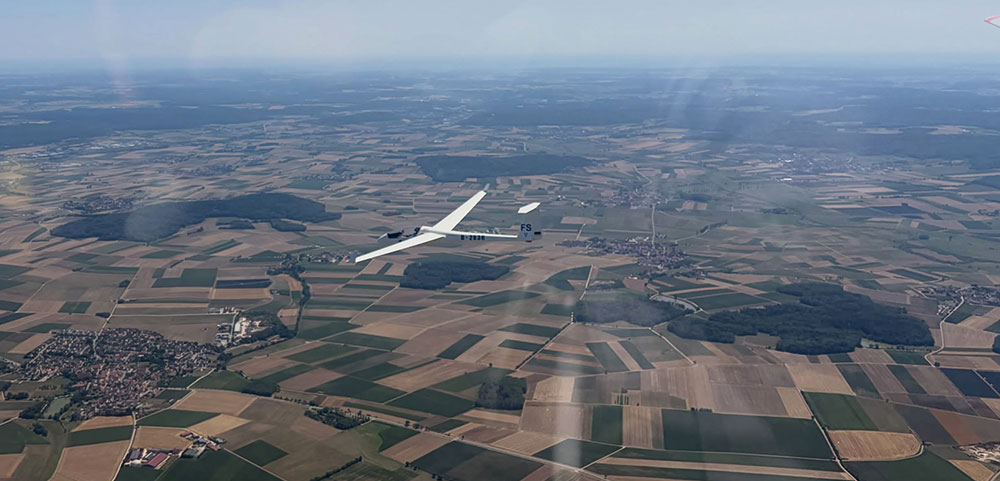
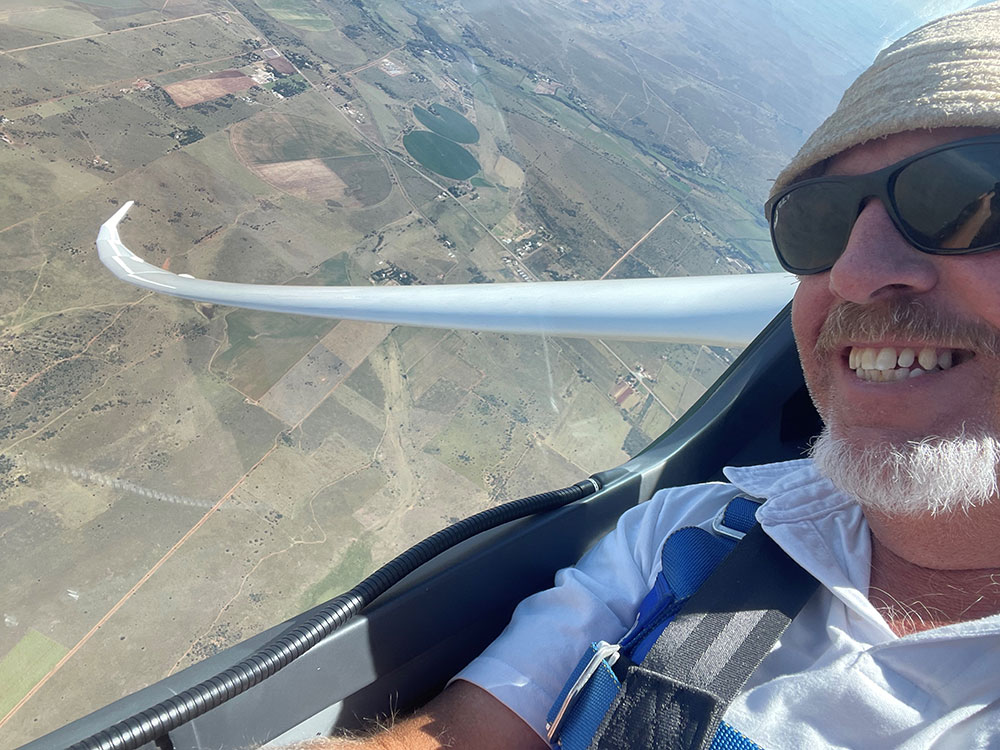
ABOVE: Amber flying with Max, in a photo taken from his cockpit.
Sporting Background
My own background in high-performance sport generally turned out to be really useful. I've spent years playing sports at a high level, and that has trained me to think strategically and stay a few steps ahead. In gliding, that meant thinking about what other teams were likely to do, when we wanted to start, and what lines we’d want to take. You’re constantly thinking about your opponents while also managing airspace, weather and general navigation.
Another helpful skill was knowing how to mentally reset. Through sport, I've participated in a lot of sports psychology sessions, and over time you learn how you handle stress best. I'm naturally quite an emotional person, but I've learned to set my emotions aside almost entirely while flying and just focus on the task. The emotions will come up after the flight, but it’s not worth letting them get in the way in the middle of it. It took me a while to get to that point.
With that same theme in mind, next time, I'll be prepared to trust myself more from day one. I improved so much over the competition, and a big part of that was simply my confidence growing. The difference between my flying in the first few days and the last few days was stark. If I go into my next comp trusting my own ability and not letting doubt creep in, I think I can hit the ground running from the very first day.
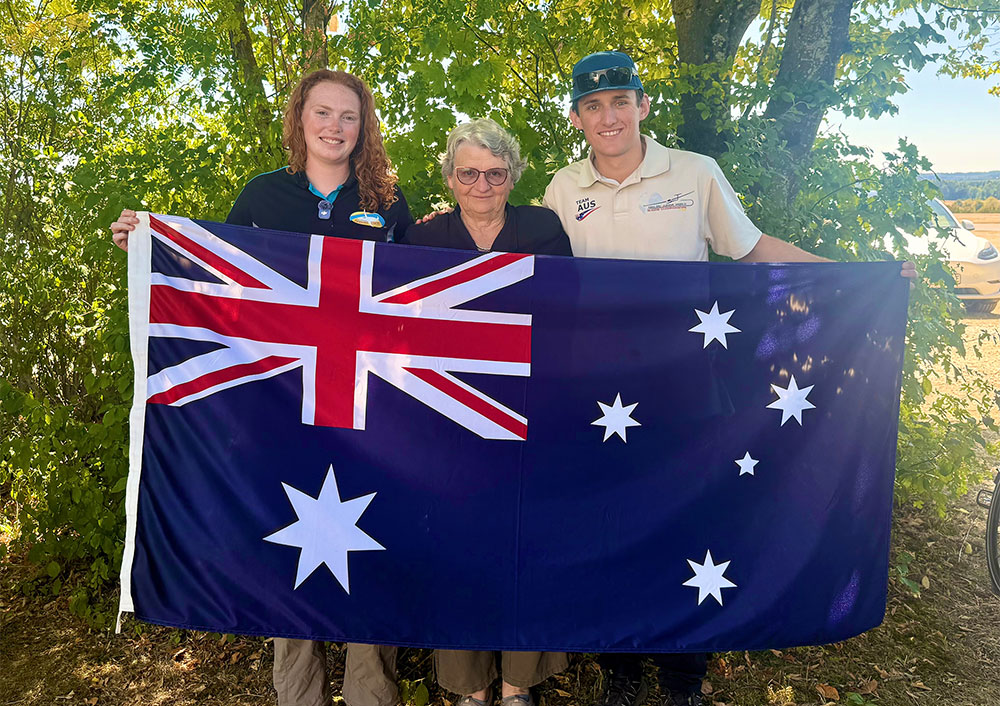
ABOVE: Team Captain Mandy Temple with Amber and Max.
Have Some Fun
Competitons are also about having fun, and for me the most enjoyable part of the competition was the social side. After a long flight, it was always interesting to sit down with pilots from the other teams and compare how everyone's day went. Of course, hitting the dance floor with all my new friends was great fun as well. I’ve come home with so many new connections that I talk to every week, and I look forward to flying with them again.
On the downside of that, the part of the competition I enjoyed the least was probably the lack of sleep. Flying every day with so much on your mind is quite tiring. I actually ended up basically sleeping the entire rest of the day away. However, most of the comp was so enjoyable that this was the only negative!
On Staying Determined
My main piece of advice to other juniors looking to fly on the international stage is to back yourself. That doesn't mean trying to convince everyone you're a great pilot. It means having the determination to keep pushing yourself a little outside your comfort zone. Set a goal every time you fly. It doesn't have to be big: even something simple like thermalling tighter or centring in fewer turns will make you a better pilot.
I know one of the things that got me pushing myself was being nicknamed ‘Protractor’ at Joeyglide, and fixing my angle of bank in turns as a result.
If you get the chance to fly with a coach, take it! Every coach will teach you something new. Over time you keep the bits that work for you and use them to build your own flying toolbox. Flying with other pilots in general will also make you stronger. Don't stress if you can't keep up with them yet. Ask them afterwards why they made the decisions they did in the air. Every bit of information you pick up is valuable somehow.
Max's Commentary
The first day was going really well - until it wasn’t. Good conditions down the first and second leg made for some fast and enjoyable racing. But I made a bad decision, which put me low in a tricky spot, right on the edge of a thunderstorm with no sun on the ground. I struggled around the edge and made it within 15km of the finish, but by then the day was too far gone. Well done to Amber for getting around. It is early in the competition, tomorrow is a new day and I’m looking forward to it.
Storm Day – Race 2
It’s never good to have your glider still in the hangar 30 minutes before launch, but thanks to the maintenance team and a very reliable crew, I was back on the grid just in time. The flight that followed was really enjoyable, and a good step up from yesterday. Now it’s just about continuing to learn and enjoy the flying every day, and hopefully the rest will follow.
The streak of Australian weather seems to be ending tomorrow, so it’s back to some nice European conditions.
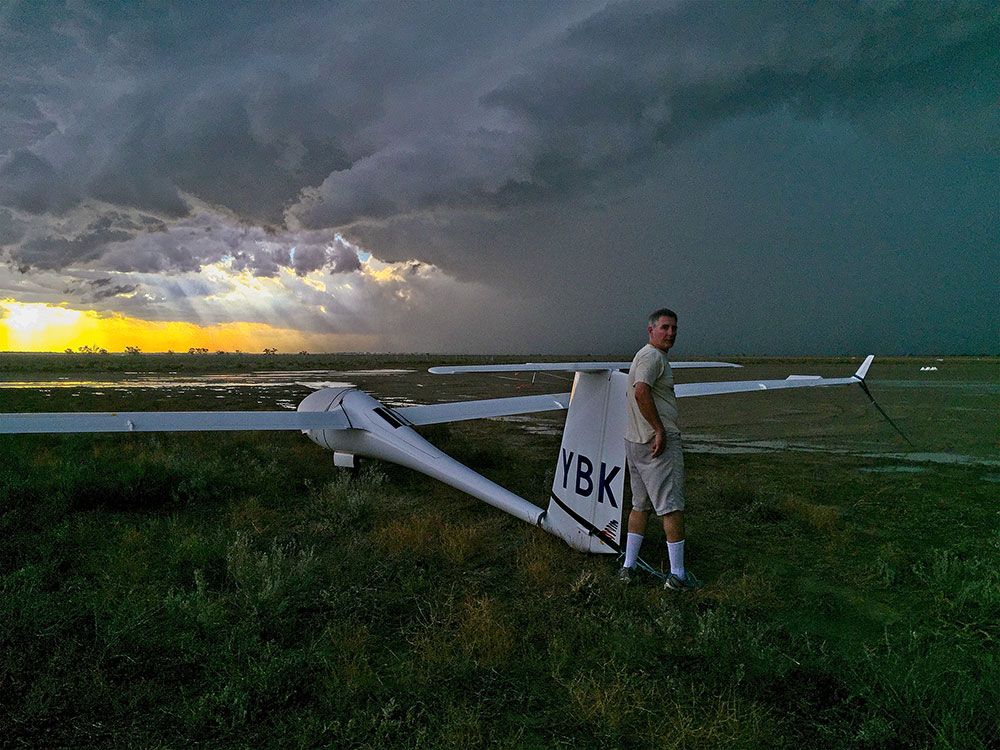
Another tricky storm day today. Over the 270km racing task, Amber and I came across multiple different rain showers that we had to navigate around. A well planned start time led to a good result for team Australia. Thanks are due to the helpers on Max the ground - Mandy, Mum and Leonard. It’s not possible without you guys.
The day finished off with International Night. It was good fun talking to the other pilots, and lots of different food and drinks were available.
[Note for readers: Today also marked Max’s 18th birthday. Happy Birthday, Max!]
Race 4 - When Blue is not Blue
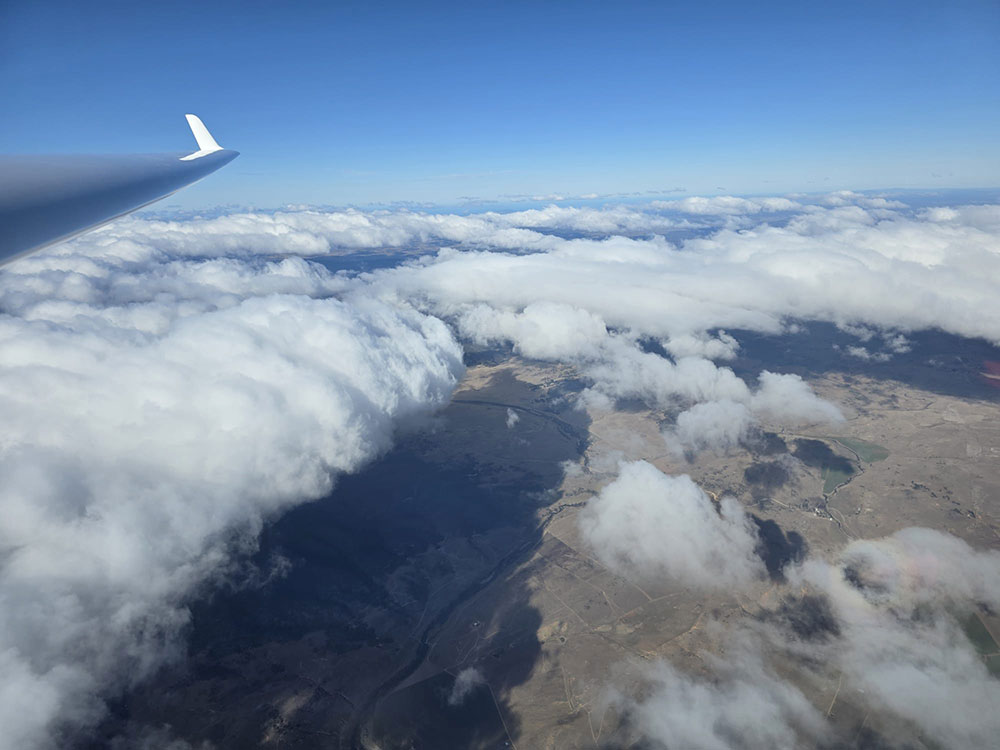
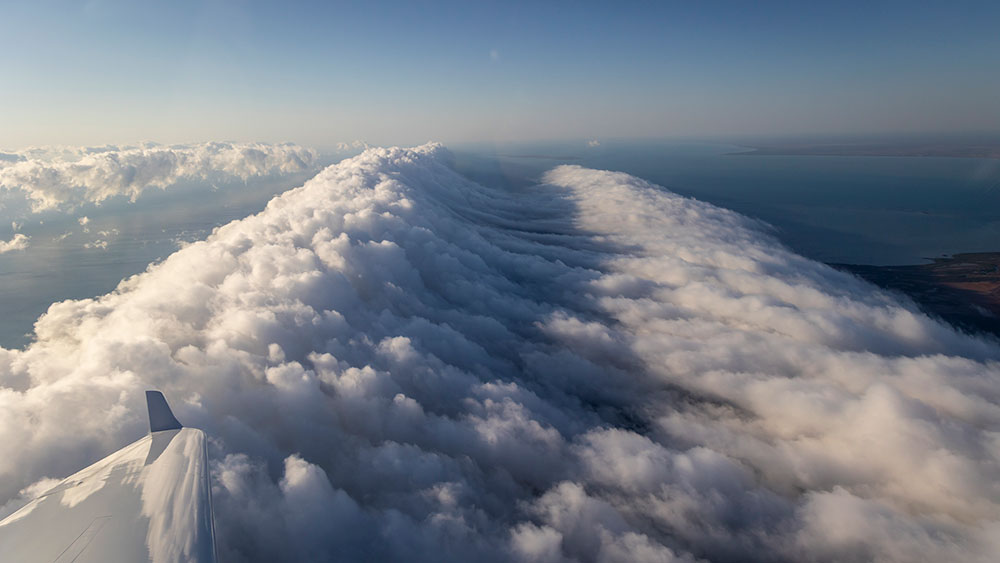
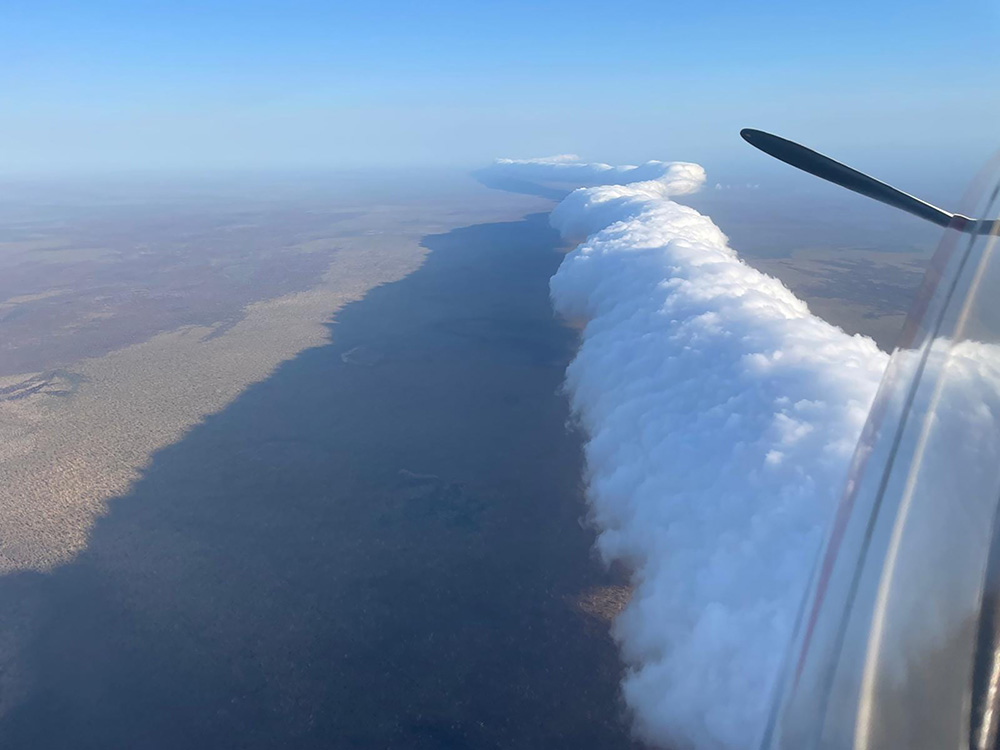
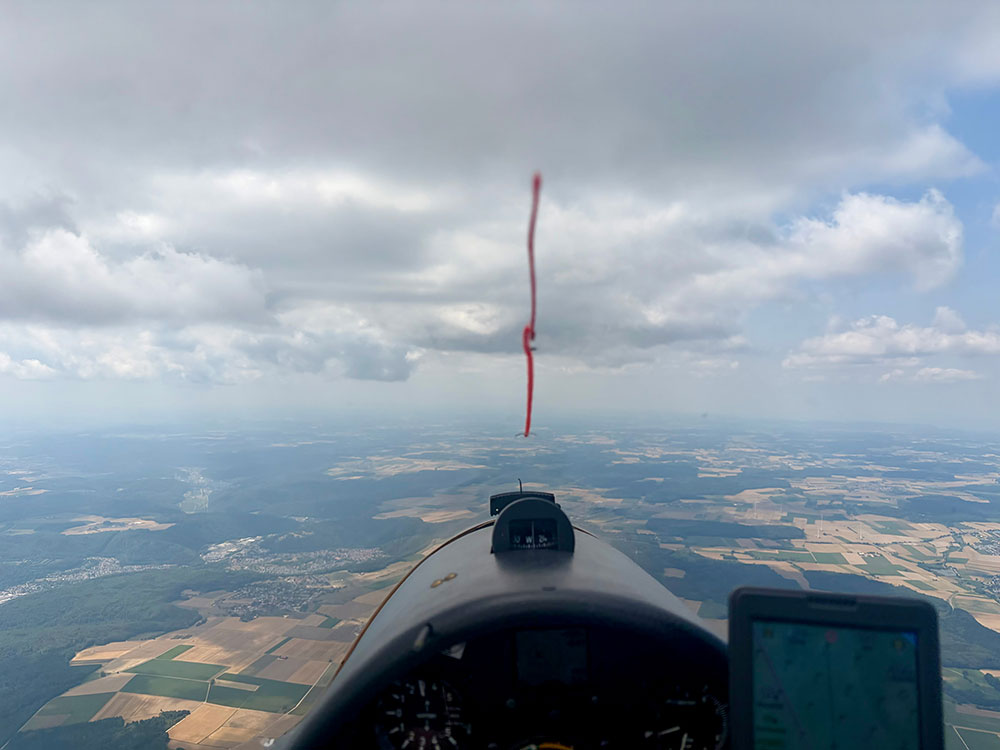
I learned a lot in the really interesting conditions today. What was supposed to be a blue day was very far from it. Early in the morning, mid level cloud started appearing in different areas, and before long it had covered most of the sky. It was stratocumulus sitting directly on top of a thin layer of cumulus.
Below both cloud layers, pre start, conditions were very weak, less than 2kt average. I searched around until I found a climb strong enough to reach the cu cloud base, then I flew out in front to start climbing in shear wave. It was then a process of climbing to the mid-layer cloud base, then flying out the upwind side of that. About 1,000ft above the strato cumulus layer, several lenticular clouds were marking the wave, which allowed for a climb to FL93, 800m above the cu cloudbase.
I jumped across a wave band to get to the start line, and saw that the lenticular and stratocumulus cloud streets formed by the wave seemed to go on forever in the direction of the first turn point. One of the coolest experiences I’ve had in a glider was being able to fly 80 of the 110km in wave to the first turn point, with an average L/D of 90:1 for the first leg. The second leg was fairly straightforward with 1/8 cu and strong climbs, where I came across a few other gliders that I flew the remainder of the task with.
The last leg was tricky with the wave bands still visible and no thermals to be found directly underneath them. The only chance to find a thermal was to watch the cloud on the upwind edge very carefully to see if it was forming a cu, and then get to it before it cycled. It was really good fun and a great learning experience. Taking it day by day now, still 7 days to go.
Quick Change
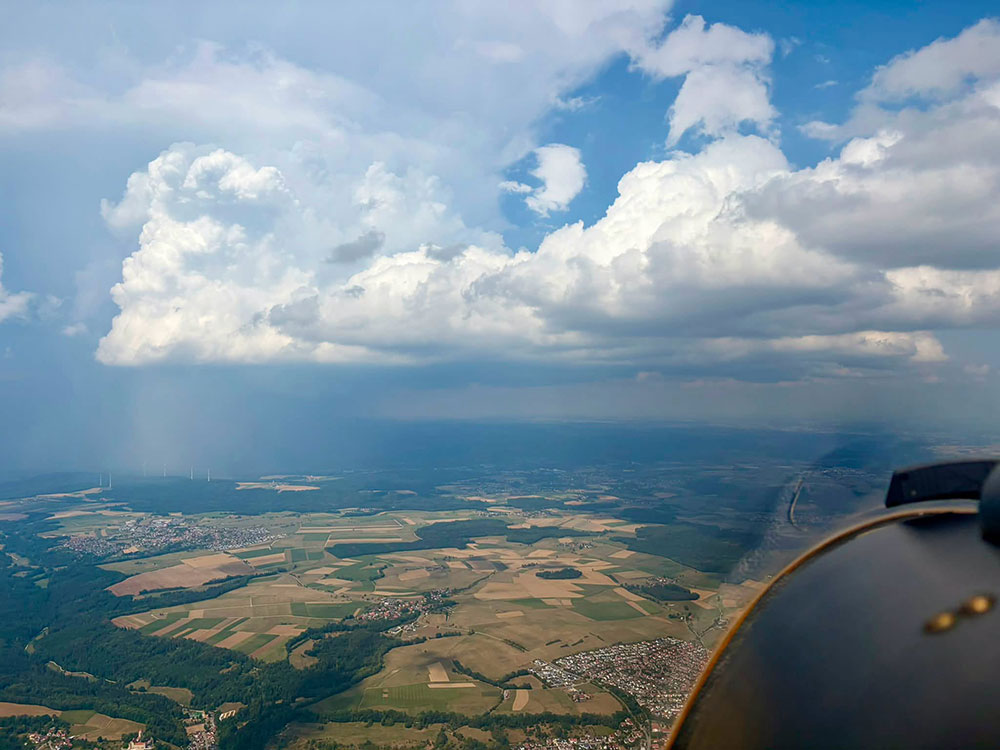
Now that Day 9 is done, I see that a very distinct difference between Australia and Europe is how quickly the conditions change here. We had a 340km racing task today with a variety of conditions – from strong convergences to blue and dead areas.
The tricky part is always the transition between these areas, which is what almost caught me out today. Thanks to Amber and some careful thermal selection, I managed to climb out of a hole and had a solid second half of the flight, pulling up 400m on a 4kt MacCready setting for the final glide.
A gaggle of 20 gliders at 800ft was a new experience for me, but it was good knowing we weren’t the only ones down there. Low and blue today, not a bad thing for Australians but it does add to the competitive risk. WeGlide Copilot is essential on days like this as it displays the SkySight convergence forecast, which was spot on today – as usual. We managed to get around the task well. Congratulations to Amber on her podium finish.
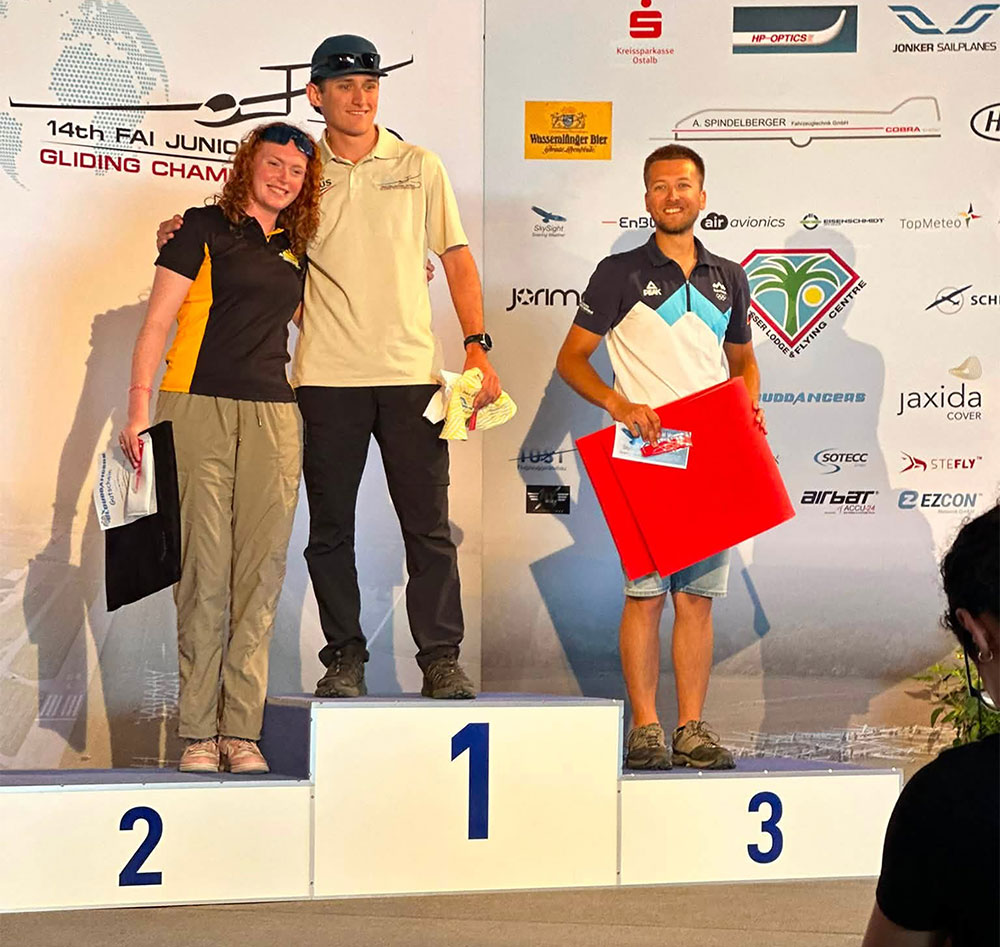
ABOVE: On the Club Class podium after Race 3. A double for Australia with Max in 1st place and Amber in 2nd place.
Claiming the Title
That’s it. The 14th FAI Junior World Gliding Championships has come to an end, and I am proud to have claimed the title of Junior World Champion.
I have learned more during this competition than I could have ever imagined. Adjusting to a completely new landscape and variety of conditions made a big contrast to Australia, but I think it will change the way I fly back in Gawler. Over the course of the 10 flying days, we had a very wide range of weather – 10,000ft booming cu, storms, blue and some convergences like I’ve never seen before. WeGlide Copilot with SkySight’s weather forecasts made it easy to navigate those conditions. They are definitely a must-have for competition flying.
There are so many people that contributed to this result. Thank you to Mandy, Leonard, mum and dad, coaches Pete, James and Matt, Uli and Keith and Bastian for the winning glider. Thank you to Bernd and the organisers for running such a great event. Well done to the team, and thank you to Australian Junior Soaring for supporting Amber and me.
Last but definitely not least, thanks to Amber, It would not have been possible without you. It was 100% a team effort and I look forward to flying with you again.
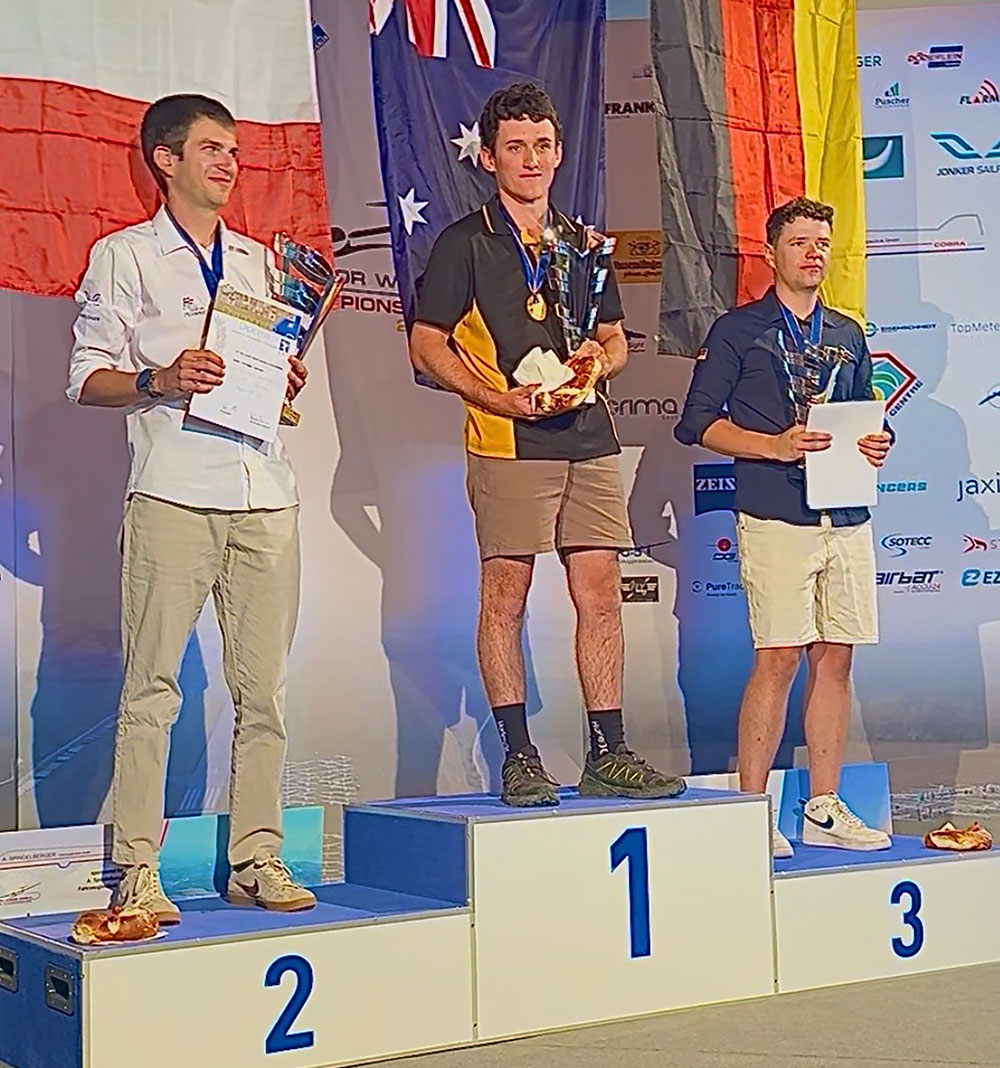
ABOVE: Max Scutchings, the Club Class Junior World Gliding Champion
Junior WORLD GLIDING CHAMPIONSHIPS Club, Standard Classes
Aalen-Elchingen, Germany 1 - 14 August 2026
Club Class
1 Max Scutchings Australia ASW20 7,388
2 Nicolas Caudrelier France LS 7 7,348
3 Nils Zitzelsberger Germany LS 7 neo 7,296
13 Amber Davison Australia LS 3 6,788
Standard Class
1 Max Maslak Germany Ls 8 neo 6,672
2 Patrick Benoist Germany LS 8 neo 6,567
3 Lasse Edslev Denmark LS 8 6,536
Full results https://soaringspot.com/en_gb/jwgc2026
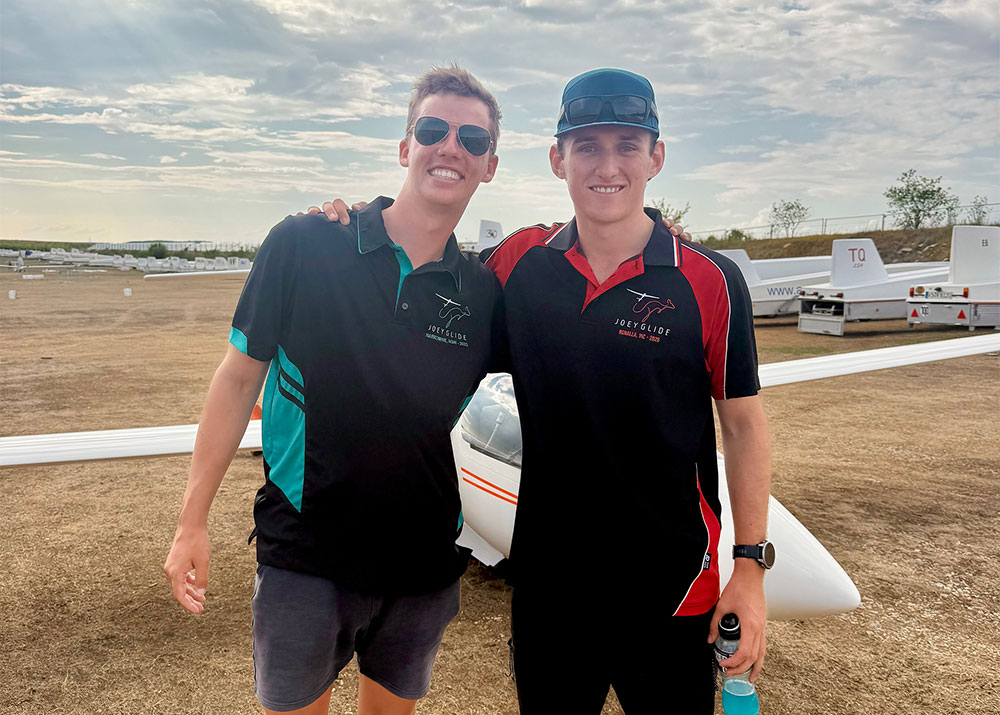
ABOVE: Max with Leonard Freitag, his crew for the championships.
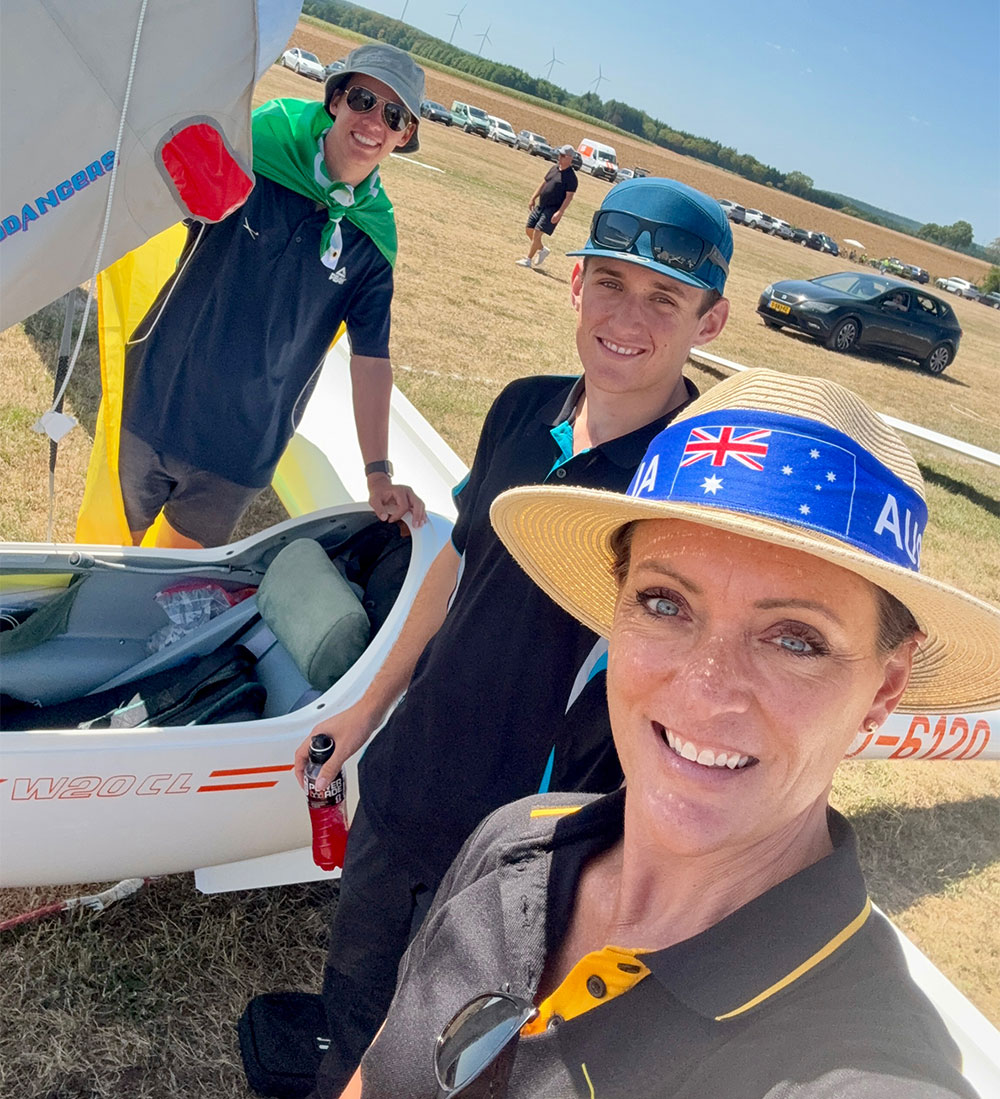
Max with Leonard and his mother Nat who was theer throughout the competition.