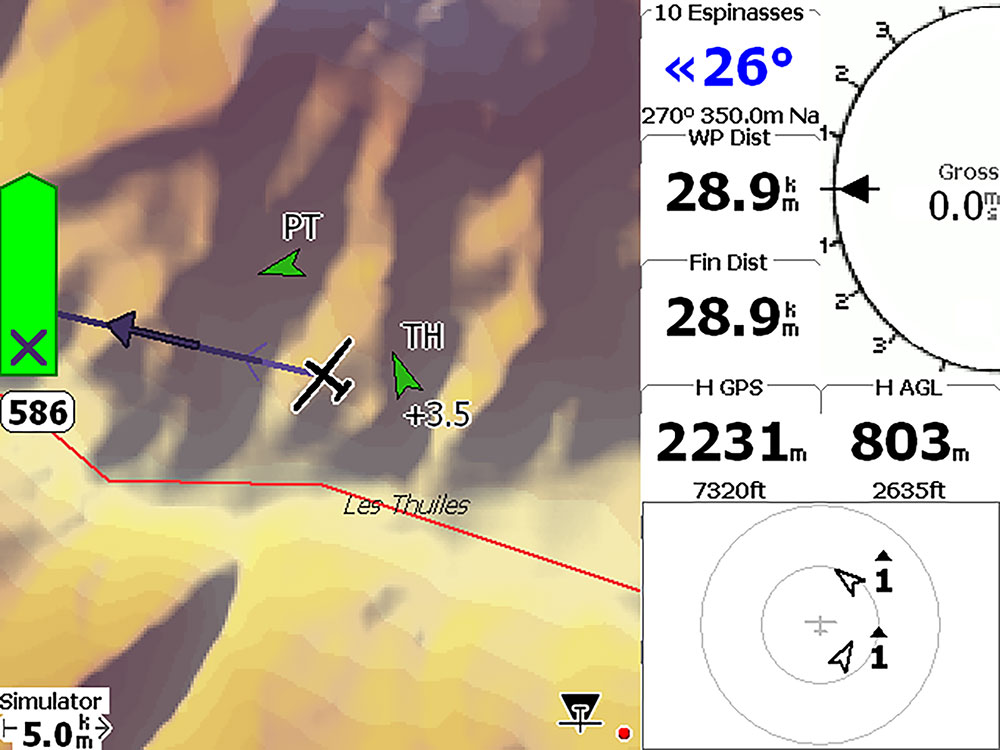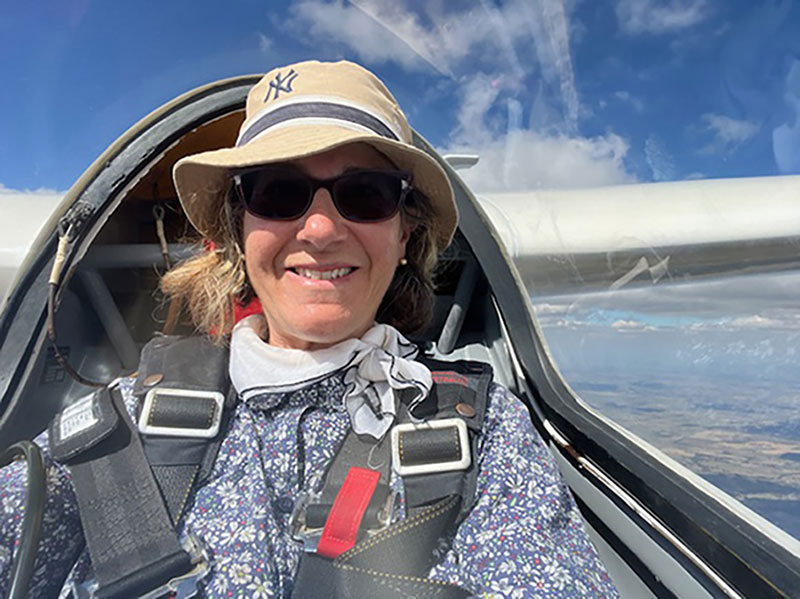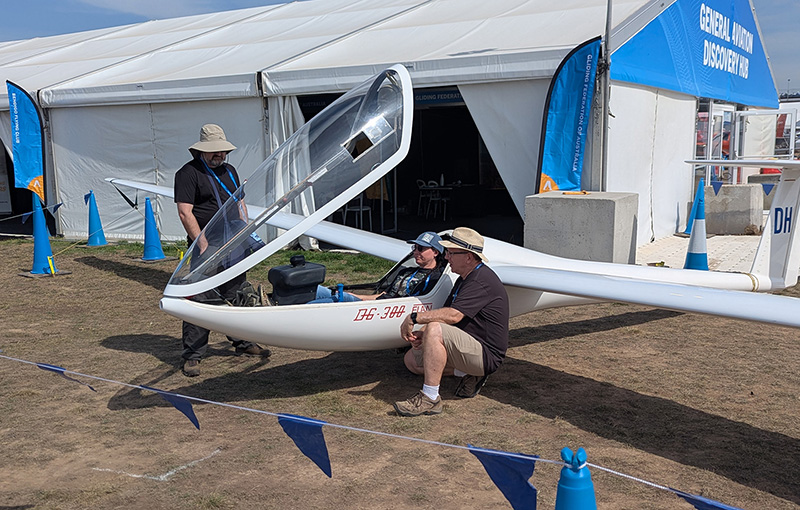
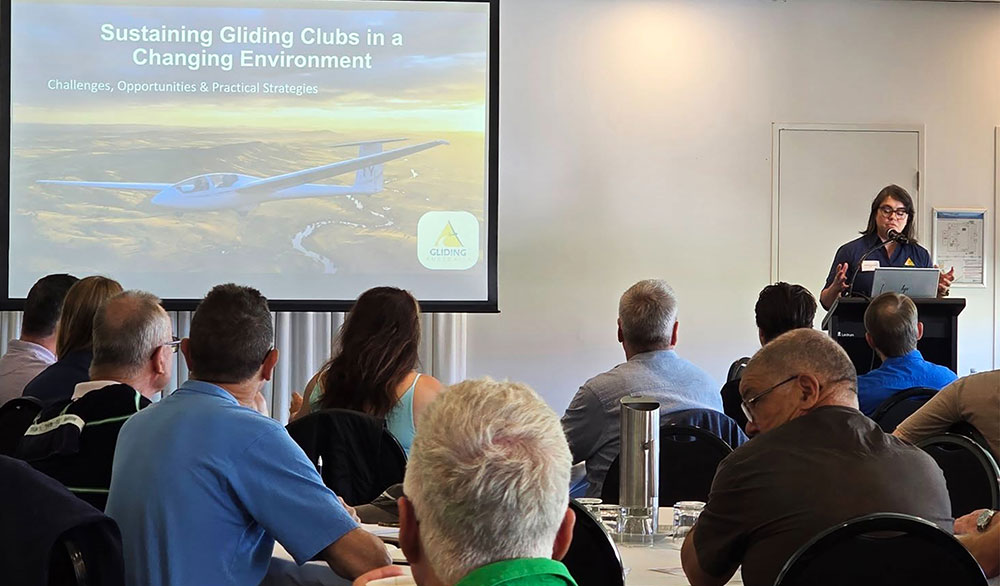
Mariela Pocklington giving her presentation.
By Drew McKinnie
Safety Manager
On the weekend of 18 – 19 April, GAus, CASA, Industry and Queensland Gliding members, plus several interstate members, gathered for the ‘Safer Skies, Stronger Clubs’ Event in Brisbane.
This was a most welcome and lively gathering, with some brilliant speakers, high energy and plenty of networking and side meetings face to face. AV contractors were also engaged to record presentations for uploading later to Gliding Australia’s YouTube channel. Extracts are coming soon on www.youtube.com/@glidingaustralia8510.
Speakers
Air Marshal Geoff Brown AO
Geoff gave his insights on ‘Building Better Safety Culture and Performance’, based on his experiences in both Defence and gliding operations including helicopters, Roulettes, FA18s and high-performance competition. He spoke of the need to be attuned to even slight signs of divergence from safe practices, as some organisations have been slow to perceive normalised risks. He also noted the importance of culture and leadership commitment to learning from mistakes and disasters, plus defensive approaches such as never fully trusting oneself and performing critical actions to prevent the inevitable errors and lapses.
In a gliding context, he acknowledged the serious pressures of an ageing volunteer base, Covid, economics, Pawnees and others, and the power of a supportive culture in countering these. He highlighted the need for better information flow and learning for all club members, the dominance of human factors issues, plus the benefits of growing humble, disciplined pilots. This set the scene for results-based discussions later.
Sidney Dekker
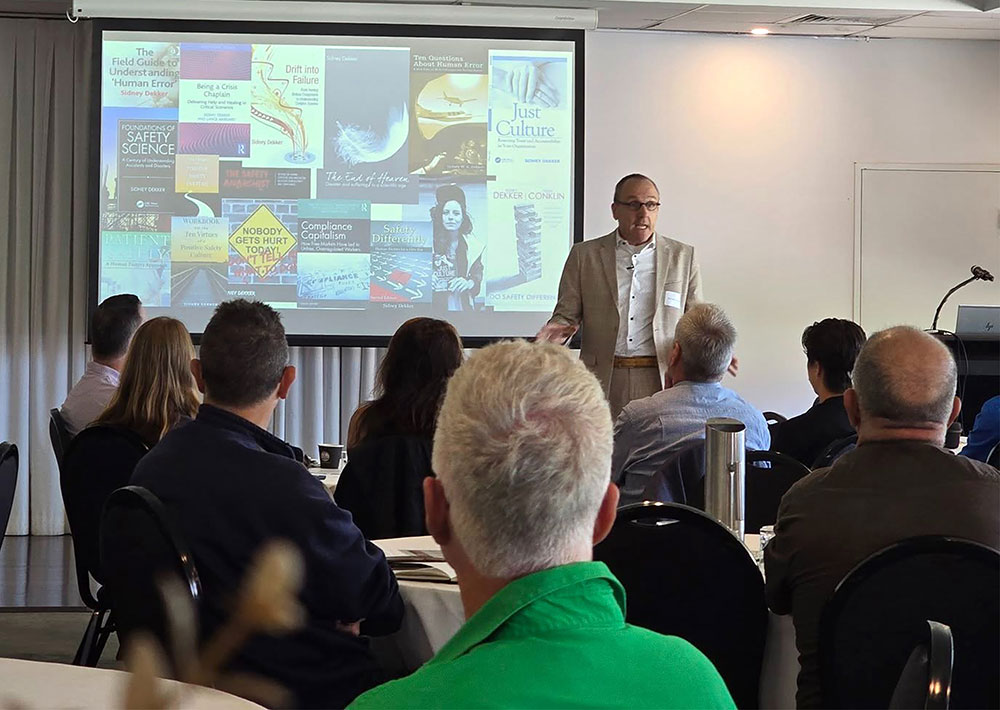
Professor Sidney opened our second day with a keynote address titled ‘Closing the Loop – Safety Performance, Human Behaviour and Future Growth’, delivered with his characteristic energy, humour and penetrating challenges to orthodoxy. While acknowledging that we must learn from what goes wrong, the Safety I approach, he reminded us that much more goes well than goes wrong, and that we must cultivate our positive adaptive capacities.
In explaining the Safety II paradigm, he advocated more open safety culture and conversations, and national and club level efforts to remove downward pressures on cooperation. He spoke candidly about tragedies. He sees them as a stress test for clubs that need to explore what could have gone much worse, celebrate the positive capacities where worse outcomes were averted, and drive forward-looking accountability – whose obligation it is to fix issues, who impacted the situation, and what to do now.
His observations on what he calls safety theatre – problems fixed (or not) with hi-vis and posters – drew much amusement. He focussed on GSD or Getting Sh** Done, and building ABC – Alternatives, Balancing and Challenge networks. Stronger clubs could benefit from this, as well as building inclusion, motivation to have fun and excel, and feeling part of something bigger in communal activities.
CASA
The CASA team, led by Wayne Morgan and Andrew Lockett, presented on the Safety Sector Risk profile methodology and ran a consultation workshop on some priority gliding risk areas. They made positive use of the Slido interactive survey and response tool to gather our risk perceptions.
Some excellent contributions were made by Captain Andrew Learmonth from QantasLink, as well as the gliding members present. These will inform a Gliding Sector risk profile and bow-tie diagrams showing key risks and defences. This can give us greater leverage in future in our dealings with other aviation operators.
Steve Fickling, the Manager of the Sport Aviation Section, along with Graham Levitt from the CASA Flight Standards Branch, were also present. We are most grateful for all CASA sponsorship for this event, and their receptiveness to our ideas and inputs.
The CASA presentation and workshop were preceded by Drew McKinnie giving an overview of our occurrence data history and trends, evolution of our data collection and analysis systems, occurrence types and statistics, recurring and new emerging safety issues, and safety priorities here and overseas. We discussed our obligations to explore what has gone wrong in the past, and learn from worst case scenarios. We aimed to better understand human and organisational drivers of operational and airworthiness tragedies, and then build positive safety and cultural capacities to do better in the future.
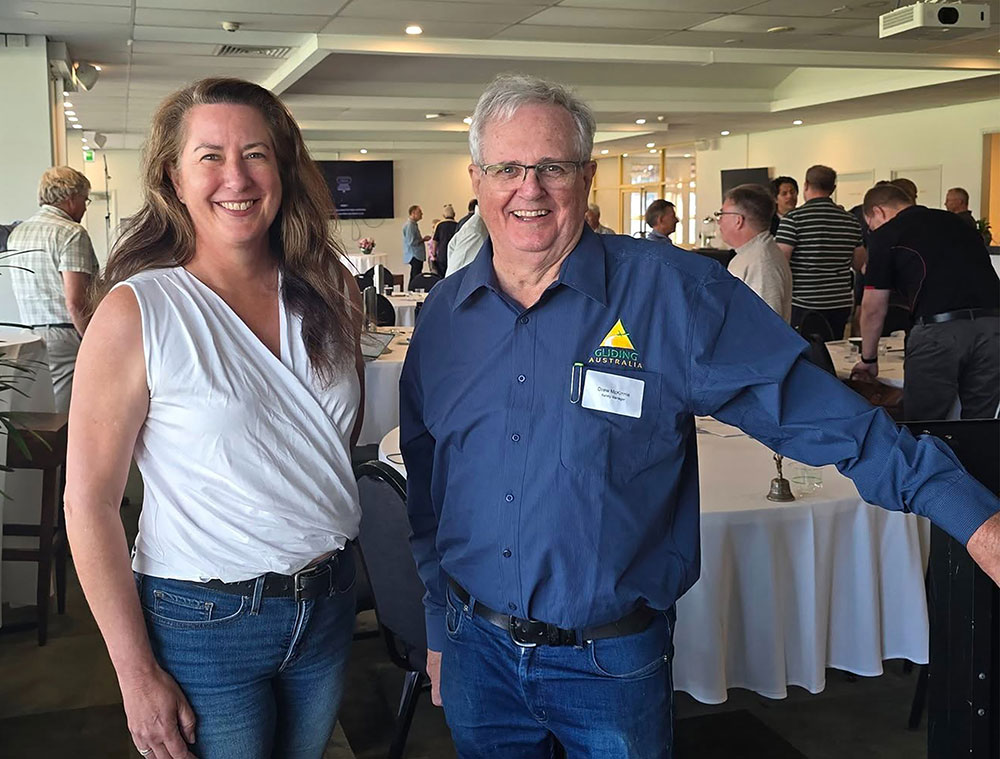
Jo Davis with Drew Mckinnie.
Anthony Smith
Anthony’s presentation on developments in Pawnee airworthiness generated much lively discussion. He discussed fatigue life and future inspection requirements, engagements with CASA, ANAC, FAA, SSA, EASA and others, and some research efforts to better understand fatigue risks. It was a data-rich and informative presentation, founded on his incredible analytical efforts and research, which will be widely shared.
He also demonstrated a new compact 10x borescope and its capabilities for spar section visual inspections, and other tasks.
James Nugent
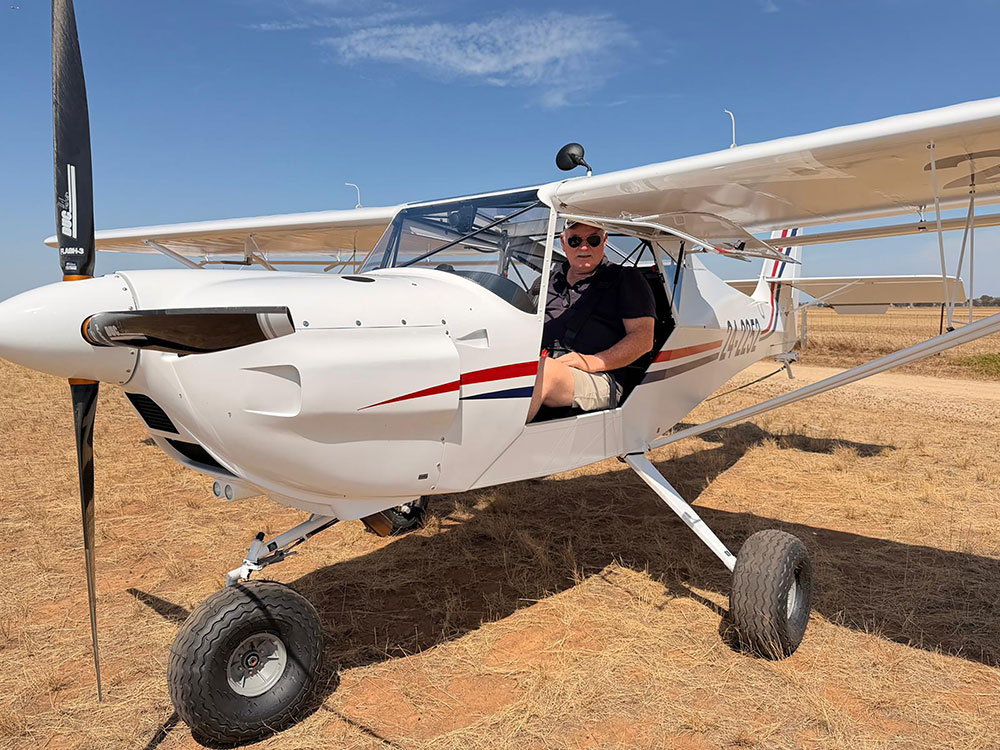
James gave an insightful summary of developments in glider towing options, comparing Pawnee and multiple Light Sport Aviation (LSA) aircraft performance, costs, limitations, opportunities and risks. Some important aspects of takeoff and 50ft obstacle clearance performance, climb performance and efficiency, engine options, airframe robustness, opportunities and risks were brilliantly presented and emphasised with ‘Mythbusters’-style summaries. We know many clubs are considering various launching options and the hard-edged economic and safety implications affecting us, hence the decision to engage AV support for later YouTube access.
CEO Mariela Pocklington
Mariela drew on her broad experiences in other sporting, administrative and community environments, plus her work with GAus Executive members including Club Development Amanda Van Der Waal, to discuss GAus and 'Club Rejuvenation Priorities and Opportunities'. Gliding clubs are the backbone of our niche aviation sport, with passionate participants now challenged to manage in changing environments.
She acknowledged the many realities we and other sporting bodies face, particularly the burdens that handfuls of volunteers in key roles are handling. This led to discussion of organisation design and strategies to rethink volunteer roles, improve outsourcing or task sharing and develop coaching capabilities for volunteers.
With examples, she noted that two aspects – flying and social connection – are critical for club growth, and how building communities and belonging can alleviate pressures on volunteers and grow the talent pool. This drove discussions on defining our niches – training, social and/or high performance, advertising what we offer better, marketing identity and member stories, describing experiences and not just the airframes.
What does it feel like? Tell those stories! So, her view of opportunities for future growth leveraged flexible approaches to volunteering, building a social mindset as well as flying mindset, projecting a clear identity, and carefully planning to manage impacts of growth. Adaptation can help all sporting clubs to survive and thrive.
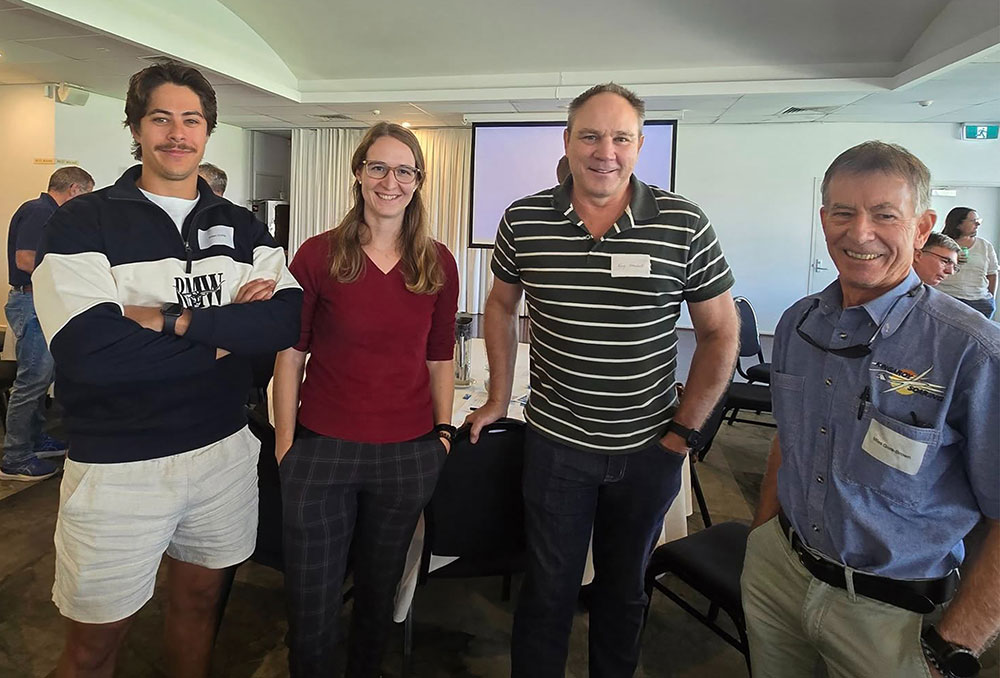
Sophie Curio
The rejuvenation theme was cleverly amplified as Sophie presented her insights and experiences of both Australian and European gliding cultures. She touched on many differences but also lessons and opportunities – family- and tourist-friendly clubs, destination hubs and facilities, social and camping opportunities, shade and air-conditioning, all of which make greater family and social engagement possible.
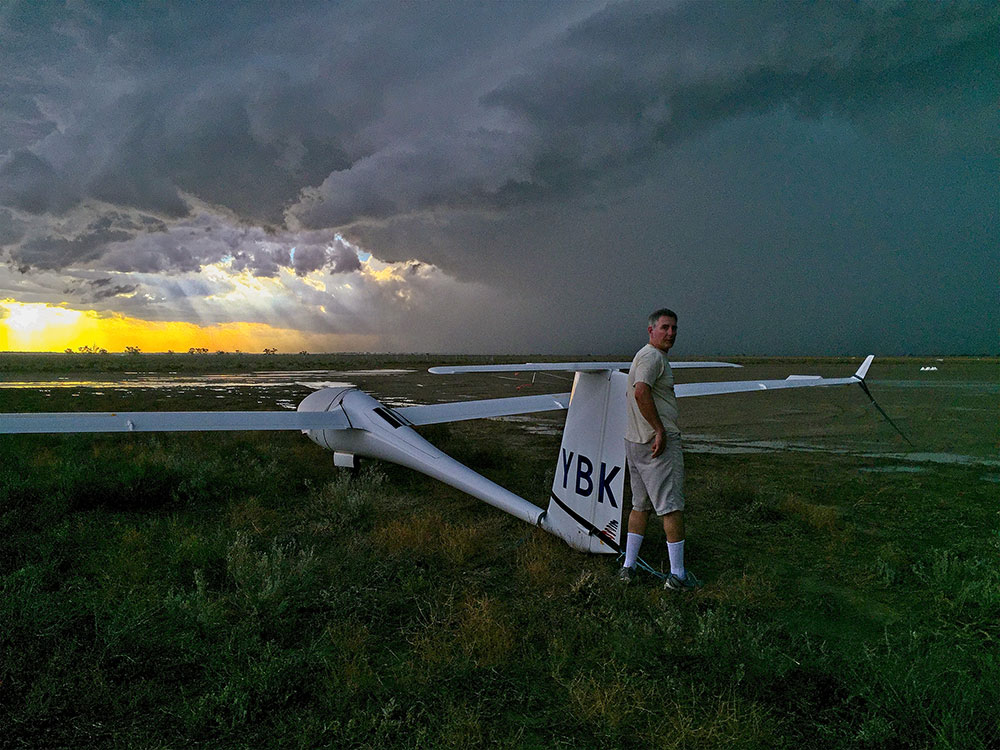
She talked about the different outlanding cultures, urging us to see outlandings as a skill and not a flight failure, and to normalise the experience and celebrate successful outcomes. Pilots need to practice often, particularly field selection, and know that retrieve help is always planned and on call.
Her constructive ideas on garnering greater junior support, by improving access to gliders, clubs and facilities, were welcomed. She also stressed engagement, spot landing contests, theory sessions, social sessions, bad weather activity, participation in maintenance days and structured education opportunities.
As an experienced, accomplished competition pilot, she saw gaggle flying as a skill to be developed, taught and not feared. Safety results from technique and not counting gliders – it’s the unseen aircraft that can get you! She described some European disadvantages – pilot medicals, regulatory audits – and contrasted those with Australian culture, which encourages greater pilot-in-command responsibility, places a high value on empowerment and provides friendly, inviting gliding environments.
The sessions described here were augmented by some summary sessions asking “where to from here?” and exploring what we can “do more of, less of, stop doing and start doing”. Along with attendee surveys, these topics will be reviewed by both GAus and participating clubs. Sidney Dekker described the ‘Kennedy moment’, when it’s not just what GAus can do for clubs and members, but also what we can do as members for our clubs and gliding communities.
Huge thanks go to all participants and organisers, the sponsors and industry supporters and the many volunteers who gave their time and made this work. The positive spirit of collaborative engagement was contagious. Good on you!
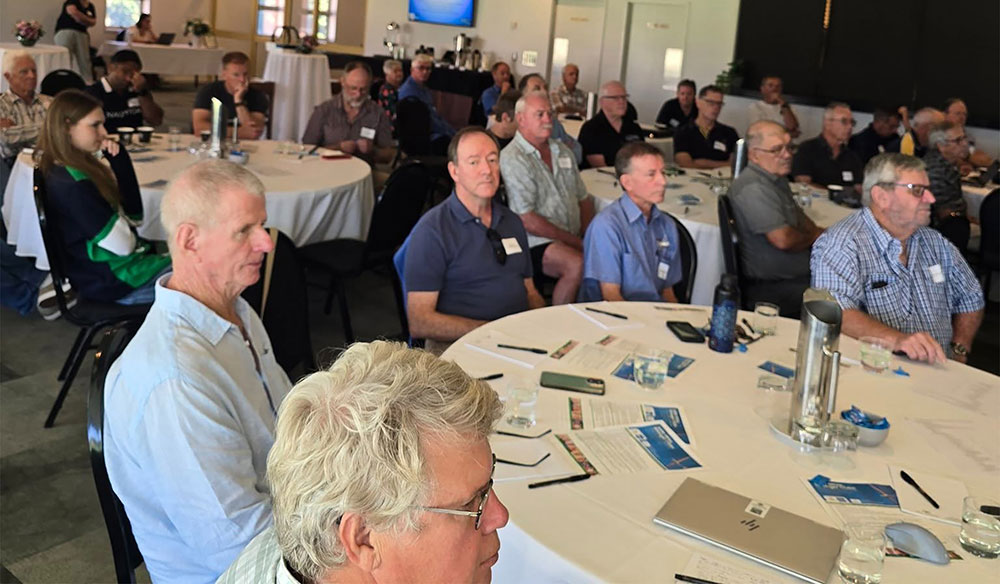
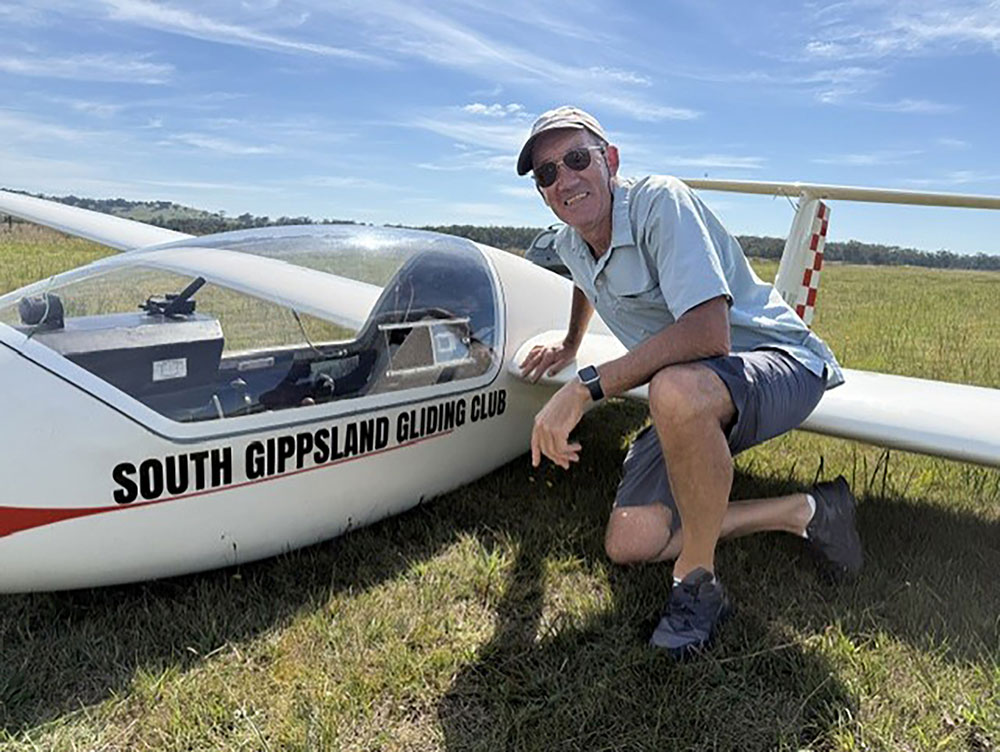
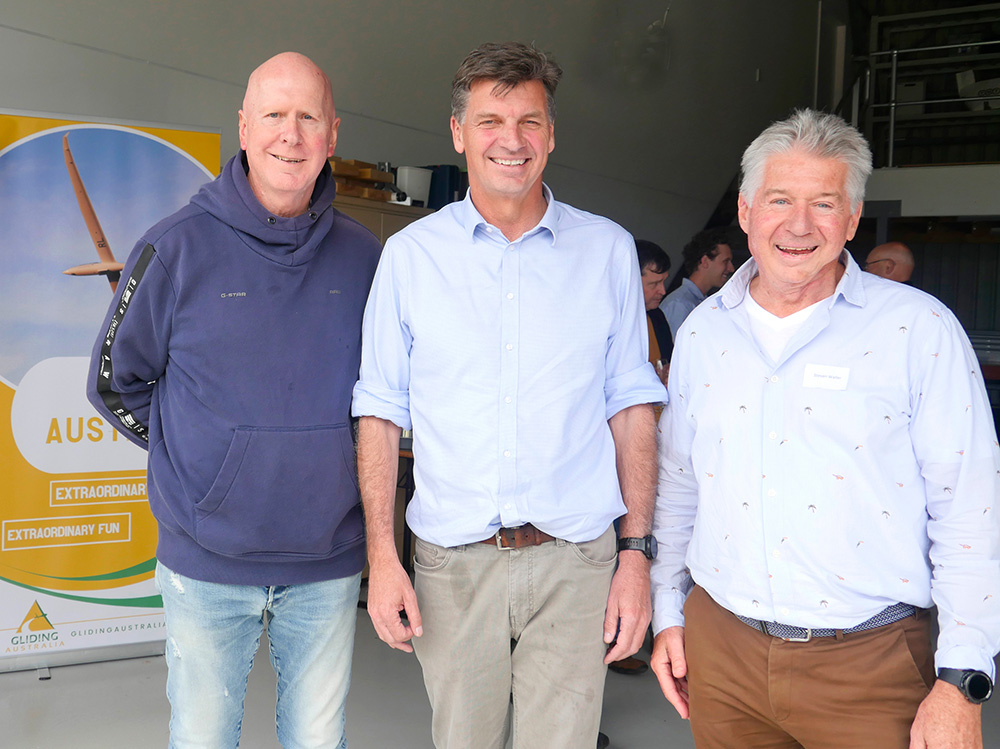
Safer Skies was well attended by many pilots, including Sophie Curio, Ray Stewart, Miles Gore Brown (above)and seated, Steve Peglar GAus Chair.