Lessons from Low-Level Sailplane Accidents
By Christopher Thorpe
Landing is universally recognised as one of the most demanding phases of any flight. In sailplane operations, this workload intensifies dramatically due to the absence of power, requiring continuous energy management, vigilant traffic awareness, precise positioning and timely aircraft configuration. Any mismanagement of these elements, particularly configuration tasks, can quickly lead to loss of control — often at a height from which recovery is no longer possible.
Several Australian fatal gliding accidents — VH-GKU (Narromine, 2012), VH-GOV (Benalla, 2015), and VH-GZA (Benalla, 2017) — starkly illustrate the catastrophic consequences that may result when landing configuration is delayed until dangerously low levels.
Despite differences in pilot experience, glider type and operational circumstances, a consistent and entirely preventable pattern emerges: late undercarriage extension, divided pilot attention, degraded control precision, and insufficient height to recognise and recover from destabilised flight. Together, these cases present an unequivocal safety message: landing configuration in sailplanes must be completed early — well before the aircraft is committed to the final approach.
The Underestimated Workload of Low-Level Configuration
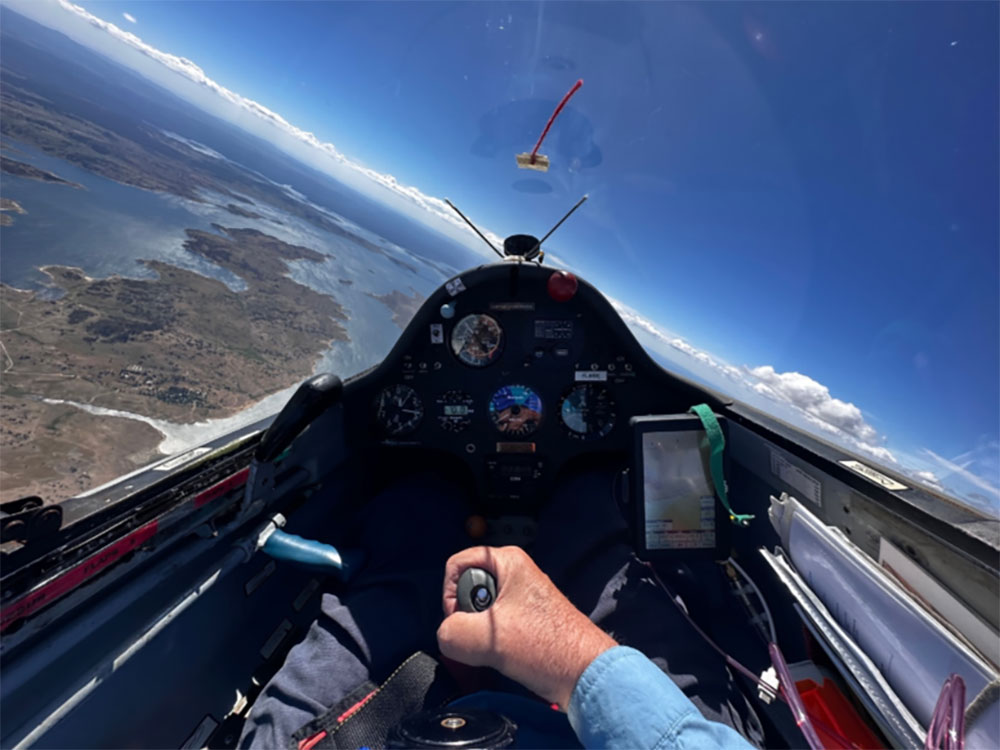
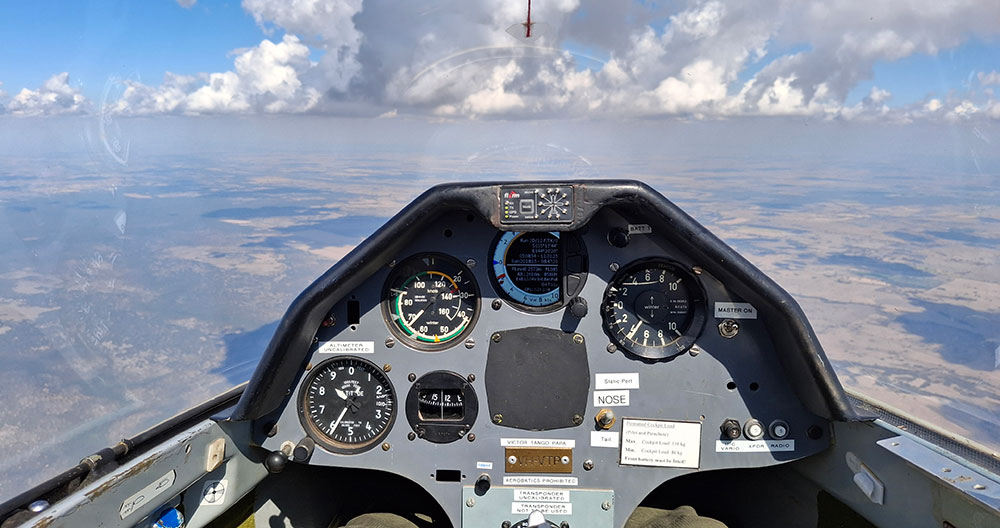
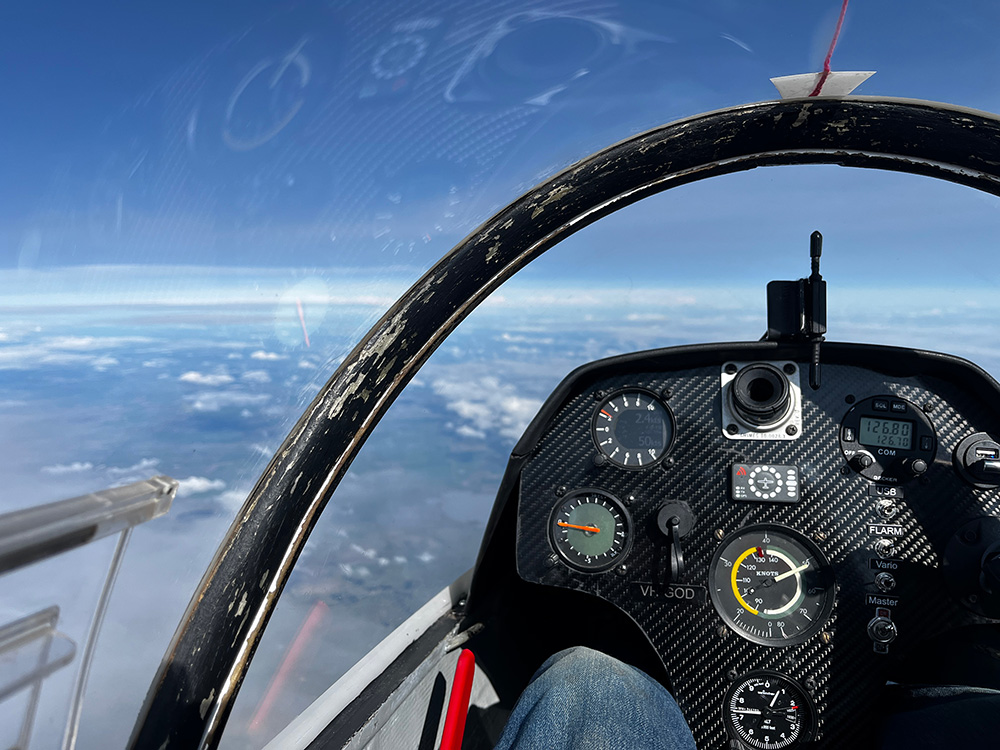
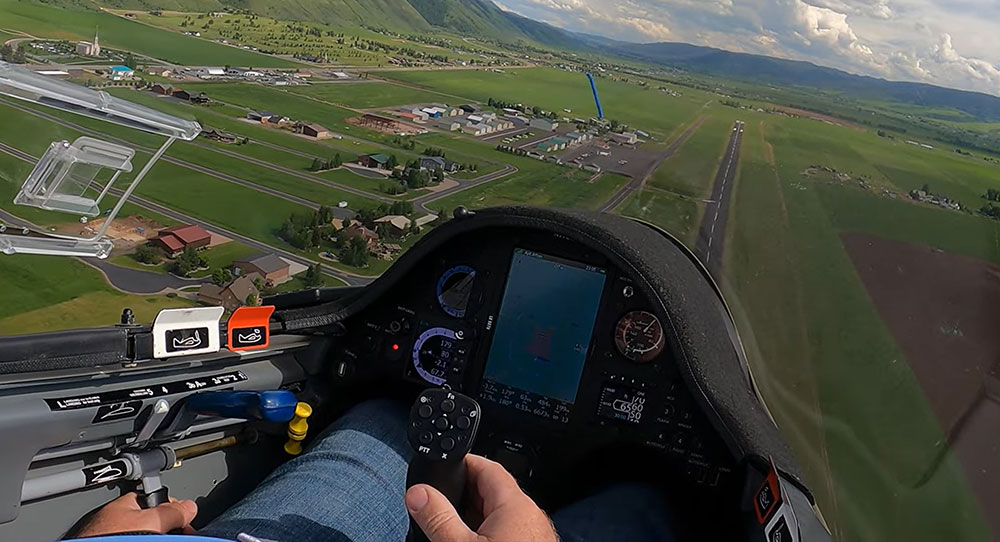
The physical act of lowering the undercarriage is often underestimated. In most high-performance gliders, flight controls are centre-mounted, airbrakes are operated by the left hand, and the undercarriage lever is positioned on the right-hand cockpit wall. Lowering or raising the gear therefore requires the pilot to momentarily fly with the non-dominant left hand while reaching across to operate the gear lever with the right.
This arrangement introduces multiple hazards, particularly when attempted at low level:
- Reduced Control Precision: Flying left-handed, even briefly, compromises fine pitch and roll control just when stability margins are smallest.
- Pitch Instability: Without proper trim, swapping hands can inadvertently pitch the nose down.
-Divided Attention: Configuration tasks at low level compete with the pilot's primary duties: maintaining glidepath, monitoring speed, scanning for traffic and managing environmental factors such as wind shear or unexpected sink.
When performed under height and time pressure, these divided workloads become intolerable.
Forensic Evidence: Two Benalla Case Studies
Detailed analysis of two Benalla accidents provides unique insights into the dangers of late configuration.
VH-GOV (Benalla, 2015):
Investigators determined that the pilot was holding the control column with his left hand at the time of impact, as the grip was found in his left hand. As the pilot was known to be right-handed, this strongly suggests he was flying left-handed while using his right hand to operate the undercarriage lever immediately prior to the loss of control. During the low-level right turn, this divided attention -- combined with reduced control authority from the non-dominant hand -- likely contributed to a wing-drop event from which recovery was not possible.
VH-GZA (Benalla, 2017):
Injury patterns to the pilot’s left hand indicated forward contact with the instrument panel while still holding the control column. As a right-handed pilot, this too suggests left-handed flying while operating the gear with his right. Flight data revealed the pilot had flown too far downwind of the airfield before attempting to return. Unable to safely glide back to the field, he attempted to stretch the glide while already under heavy cognitive load. It appears that under this significant pressure, the pilot delayed lowering the undercarriage until final approach, compounding the workload at the worst possible time. The glider impacted during an outlanding attempt after control was lost at low altitude.
These forensic findings reveal a dangerous workload compression pattern, where even highly experienced pilots may fall into the trap of deferring configuration under pressure.
Cockpit Design: Ergonomic Assistance — Not Immunity
While cockpit ergonomics can help, they cannot substitute for disciplined procedures.
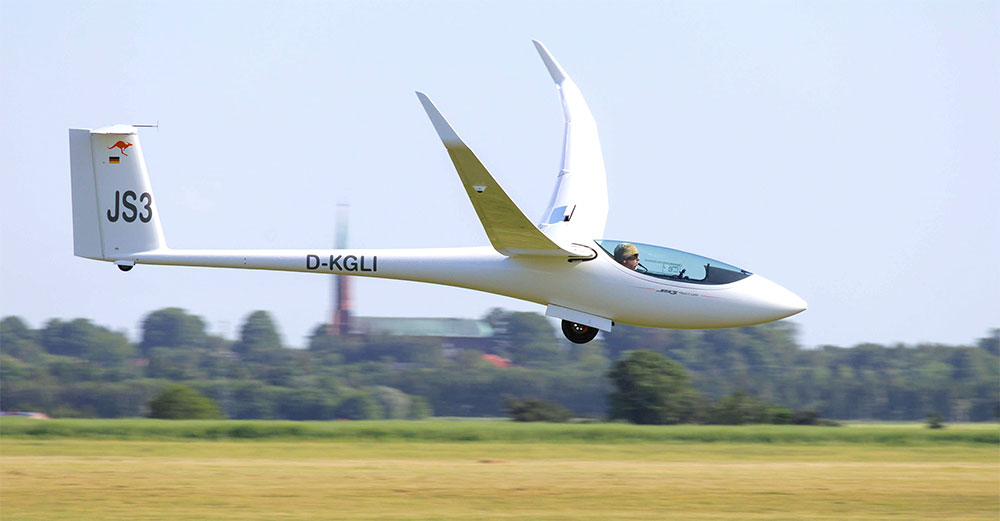
Many sailplanes, including the LS8 and Nimbus 2 involved in these events, place the undercarriage lever on the right-hand side, necessitating left-handed flying during gear operation. Some modern types (such as DG Flugzeugbau models) position the gear handle on the left, adjacent to airbrake and flap controls, allowing pilots to keep their dominant hand on the stick while configuring.
Although these designs reduce workload, they do not eliminate the underlying hazard: low-level configuration remains intolerant of any misstep or delay.
Pre-Landing Checks: A Verification
— Not a Task List
A longstanding cultural problem within gliding operations has been the tendency for some pilots to treat pre-landing checks as a “to-do list” to be completed while already established in the circuit — or worse, on final approach.
Modern Gliding Australia training — specifically Glider Pilot Certificate (GPC) Unit 15: Break Off and Circuit Planning — firmly teaches that pre-landing checks are a verification of a configuration that is already fully complete.
Prior to reaching downwind or circuit joining height, pilots must have:
- Fully extended and locked the undercarriage.
- Set flaps as required.
-Trimmed to the correct approach speed.
- Tightened harness straps.
- Dumped any water ballast (if carried).
- Set the radio correctly to CTAF, with volume
and squelch confirmed.
By the time the aircraft is abeam the aiming point, configuration should be complete and verified. The pilot’s sole task from that point forward is to safely manage the approach and landing energy state, traffic separation and glidepath control.
Accident Summaries: The Margin Lost
VH-GKU (Narromine, 2012): The pilot conducted a straight-in competition finish with minimal energy margin. Configuration was likely delayed until low level, and the glider struck trees on very short final, resulting in a fatal crash.
VH-GOV (Benalla, 2015): While attempting to reach a landing site, the pilot entered a low-level right turn while flying left-handed to lower the gear. Control was lost during the manoeuvre.
VH-GZA (Benalla, 2017): After flying too far downwind and unable to return, the pilot attempted to stretch the glide under extreme pressure. Gear extension appears to have been left until final approach. Loss of control occurred while attempting an outlanding.
Why Low-Level Configuration Fails
At circuit height or below, even momentary distractions carry deadly consequences:
- Unexpected sink can instantly eliminate glide margin.
- Hand-swapping may create uncommanded pitch changes
- No time exists for recovery from any wing-drop,
stall, or spin entry.
- Cognitive overload compromises both decision-making and fine motor control.
Loss of control can occur in 2–4 seconds, with altitude losses exceeding 300ft per spin rotation — unrecoverable near the ground.
Early Configuration: The Robust Defence
Gliding Australia’s GPC Unit 15 establishes a simple and effective defensive protocol:
- Transition mentally and procedurally to landing pilot early.
- Complete all configuration before reaching circuit joining height.
- Use pre-landing checks solely for verification.
- Adopt safe approach speeds (1.5 Vs plus half wind) below 1,000ft AGL.
By configuring early, the pilot frees cognitive resources to safely manage the high workload of the landing sequence, where situational awareness and stable energy management are critical.
Importantly, many of the key lessons from the Narromine and Benalla accidents directly informed the development of the revised GPC Unit 15: Break Off and Circuit Planning, published in 2022.
The structured guidance now embedded in the GPC syllabus was shaped by analysis of these real-world events to strengthen both training and operational safety for all glider pilots.
Conclusion: A Fully Preventable Chain
These accidents highlight a recurring, entirely preventable sequence: delaying configuration compresses workload, reduces control precision, and erodes the safety margin at a critical phase of flight.
While cockpit design features may help reduce workload, the key defence remains disciplined early configuration combined with verified pre-landing checks. These simple and universally applicable habits form a robust safeguard against loss of control, regardless of aircraft type or pilot experience, and should remain a constant feature of safe gliding operations.
Configure early. Verify high. Free your mind to fly the circuit.
Aviation punishes procrastination. Configuration delayed may become configuration denied. Fly safe.
About the Author:
Christopher Thorpe is the former Executive Manager Operations for Gliding Australia and has extensive experience in aviation safety, training and gliding operations management.
This article is provided as an educational resource for the gliding community.