By Christopher Thorpe
A fatal spiral dive accident offers critical lessons for every glider pilot. How small factors can rapidly align into an unrecoverable flight upset — and how we must train to recognise and recover.
The Incident
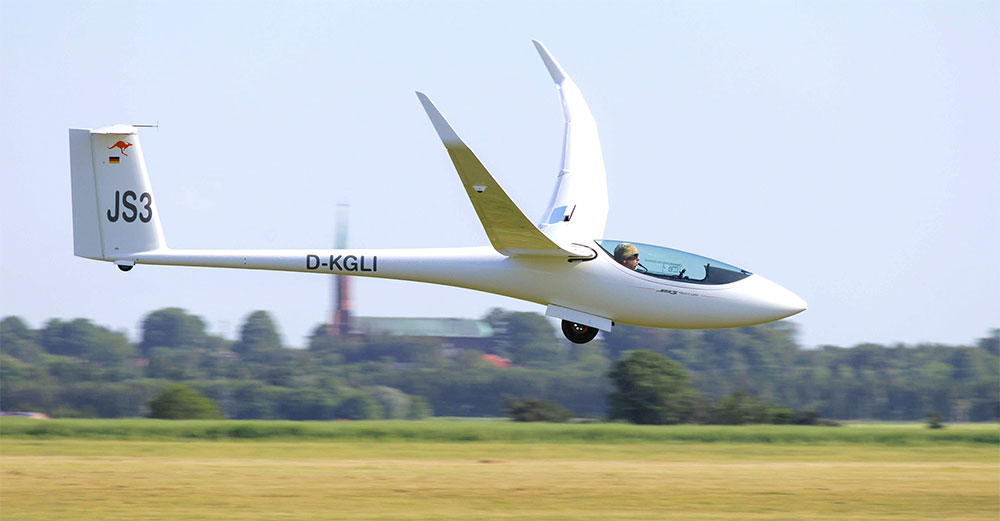
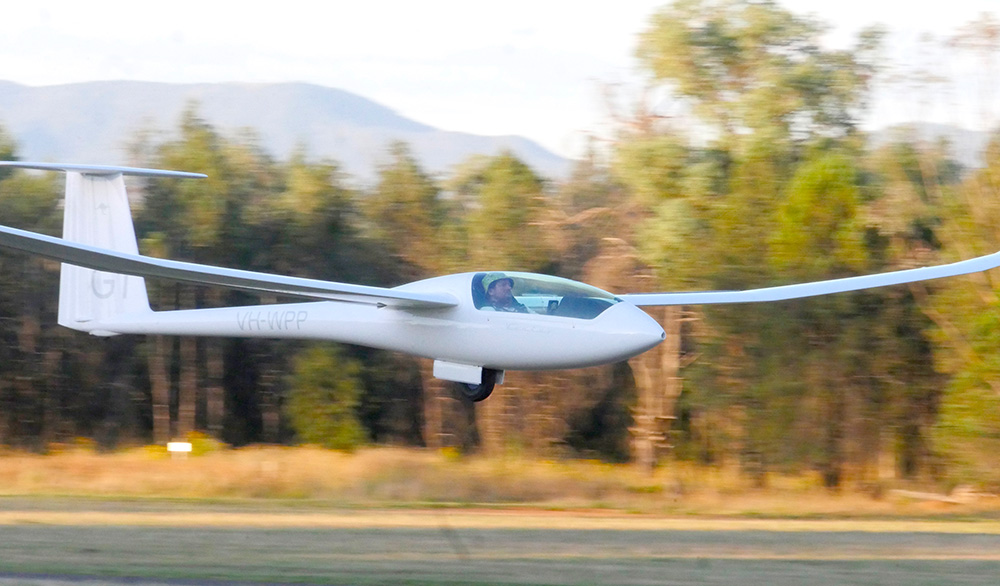
In October 2017, an experienced competition pilot flying a JS-1C sailplane was killed near Boggabilla, NSW. The accident unfolded minutes after tow release, ending in a spiral dive from which the pilot was unable to recover.
As Lead Investigator for the VH-IBS accident inquiry, I examined the contributing factors. While tragic, the accident offers important safety lessons that every glider pilot and instructor should understand.
The Chain of Events
The glider released at approximately 2,000ft AGL, turning toward nearby thermalling gliders. Moments later, it entered a steep, nose-down, rotating descent characteristic of a spiral dive, descending rapidly until impact.
Although the exact sequence of control inputs cannot be definitively determined, the evidence points to:
* Cockpit workload immediately after release;
* Ergonomic limitations while retracting the undercarriage;
* Possible inadvertent control inputs during configuration changes.
The JS-1C’s landing gear lever requires significant rearward movement and force. For a larger pilot in a confined cockpit, this may have forced the use of both hands — leaving either partial or no control on the stick at a critical time.
This likely allowed minor yaw or roll disturbances to develop unchecked. A brief wing-drop stall quickly evolved into a steep, high-speed descending turn — a fully developed spiral dive.
Understanding Spiral Dives
“Spiral dives are deceptively simple in appearance — but aerodynamically ruthless in progression.”
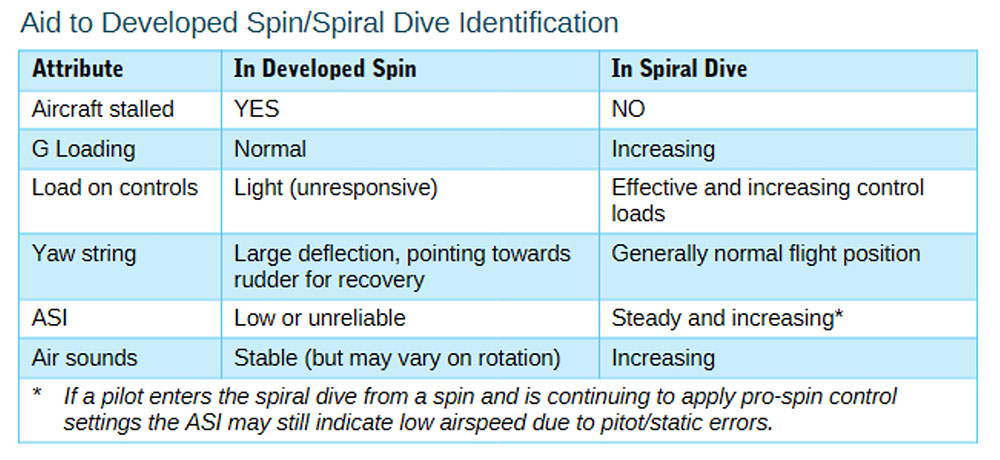
While often confused with spins, spiral dives are a completely different aerodynamic condition:
* Wings are flying, not stalled.
* Bank angles commonly exceed 60°.
* Nose-down pitch accelerates airspeed rapidly.
lG-load increases sharply.
* Altitude loss occurs at hundreds of feet per second.
Spiral dives can develop rapidly into unrecoverable situations if not recognised and corrected immediately.
JS-1C Flight Manual Spiral Dive Warning
The aircraft flight manual states that a spiral dive may occur when:
1. The aircraft terminates spinning automatically should the pilot continue applying into-spin control inputs.
2. During excessive slip angles with full rudder deflection.
Both conditions are plausible in high workload situations immediately post-release.
The Role of Ballast
VH-IBS was flown in 21m configuration with significant water ballast – including wingtip tanks.
* Ballast near CG - little effect on roll inertia.
* Ballast outboard - greatly increases roll inertia.
Increased roll inertia means:
* Slower roll response.
* Delayed recovery from steep bank angles.
* More altitude consumed during recovery.
Even correct control inputs may not have provided sufficient altitude for recovery at 2,000ft AGL.
Recovery Techniques: The Critical Difference
- Spiral Dive Recovery
* UNLOAD – Smoothly apply forward stick to relieve excessive aerodynamic loads.
* ROLL – Use gentle, coordinated stick and rudder inputs to level the wings.
* PULL (Ease) BACK – Apply gradual, progressive back pressure with minimal G-load to restore level flight, allowing excess speed to dissipate naturally.
Spin Recovery
The standard spin recovery technique for gliders certified under EASA CS-22 is universally effective:
* For powered sailplanes, close the throttle.
* Apply and hold full rudder opposite to the spin direction.
* Ensure ailerons remain neutral.
* Ease the control column forward until rotation ceases.
* Maintain these control positions until the aircraft is fully recovered (rotation stops and the stall is broken).
* Once the spin stops, centralise the rudder and gently ease out of the ensuing dive.
Aircraft manufacturers may specify slight variations in this sequence, such as a delay between rudder application and elevator movement. Always refer to the AFM/POH for aircraft-specific guidance.
Applying spin recovery to a spiral dive – particularly forward stick – can steepen the dive dangerously and consume critical altitude.
Human Factors at Play
The VH-IBS accident involved multiple human factors:
* Post-release workload: Multiple tasks competing for attention at low altitude.
* Ergonomic constraints: Restricted cockpit dimensions compromised control precision.
* Recency: Limited recent glider time and hours on type.
lStartle effect: Sudden low-level upsets delay recognition and corrective action.
Airbrakes in Spiral Dive Recovery: An Additional Hazard
Although not a factor in this accident, improper airbrake use deserves attention.
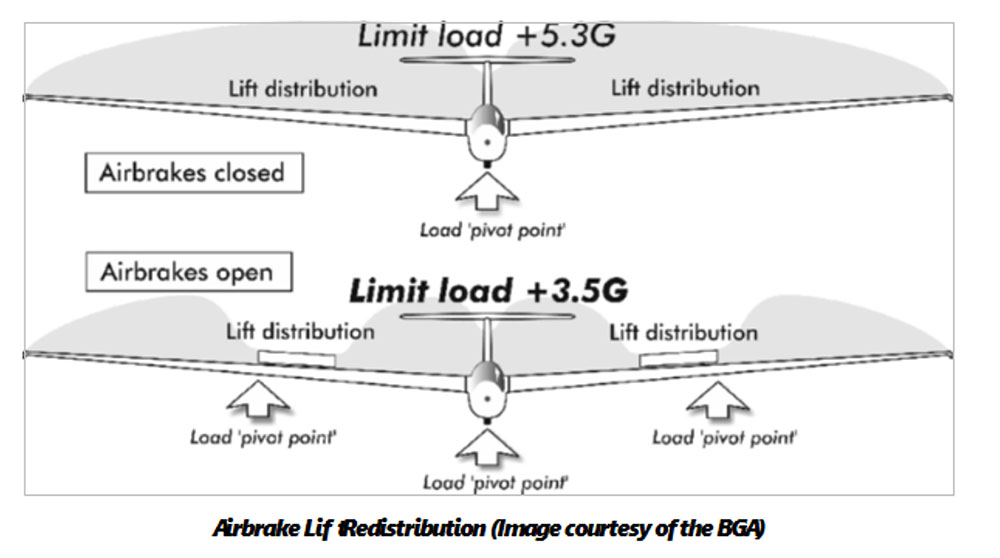
Pilots may instinctively deploy airbrakes to reduce speed during a spiral dive — but this can introduce severe aerodynamic penalties:
* Disrupts lift distribution across the wing.
* Shifts load toward wing tips, increasing
bending moments.
* Reduces roll response, delaying recovery.
* Risks structural overstress at high G.
Instructors should train pilots to avoid airbrake deployment during spiral dive recovery.
Safer Alternative: Low-G Recovery Technique
In certain spiral dive scenarios, airspeed may momentarily exceed VNE. The correct recovery sequence prioritises:
1. Smoothly apply forward stick to relieve excessive aerodynamic loads
2. Roll wings level using coordinated aileron and rudder.
3. Apply gradual, progressive backpressure with minimal G-load to restore level flight, allowing excess speed to dissipate naturally.
A brief, controlled VNE exceedance under low-G is safer than abrupt high-G pull-outs that risk structural overload.
The Broader Lesson
The VH-IBS accident represents a classic ‘accident chain’, where multiple small, individually survivable factors combine with fatal consequences:
* Inadvertent control release during gear retraction.
* A wing-drop stall evolving into a spiral dive.
* Outboard ballast increasing roll inertia.
* Delayed recognition and
possible misapplication of recovery technique.
Breaking any one link might have changed the outcome.
Expanded Lessons for Every Pilot
1 Stabilise before configuration changes: Stabilise pitch, bank and airspeed fully before retracting gear.
2 Manage workload post-release: Prioritise tasks carefully during high workload phases.
3 Distinguish spin vs spiral dive: Training must reinforce early recognition of both.
4 Apply correct recovery: Roll level first in spiral dive; avoid forward stick errors.
5 Avoid airbrakes during recovery: Airbrake deployment may worsen roll and load conditions.
6 Use low-G recovery: Minimises structural stress even if Vne is briefly exceeded.
7 Understand ballast effects: Outboard ballast increases roll inertia; recovery takes more altitude.
8 Maintain upset recovery currency: Regular practice sharpens recognition and instinctive response.
9 Ensure ergonomic cockpit access: Full, unrestricted control movement must be available at all times.
Conclusion
The VH-IBS accident highlights how easily multiple minor factors can combine into a fatal chain. For glider pilots — especially those operating high-performance, ballasted sailplanes — early recognition, disciplined recovery technique, workload management, and continual upset training remain essential defences against spiral dive accidents. “Recognise early. Roll level first. Recover gently. And train regularly.”
About the Author:
Christopher Thorpe is the former Executive Manager Operations for Gliding Australia and has extensive experience in aviation safety, training and gliding operations management. This article is provided as an educational resource for the gliding community.